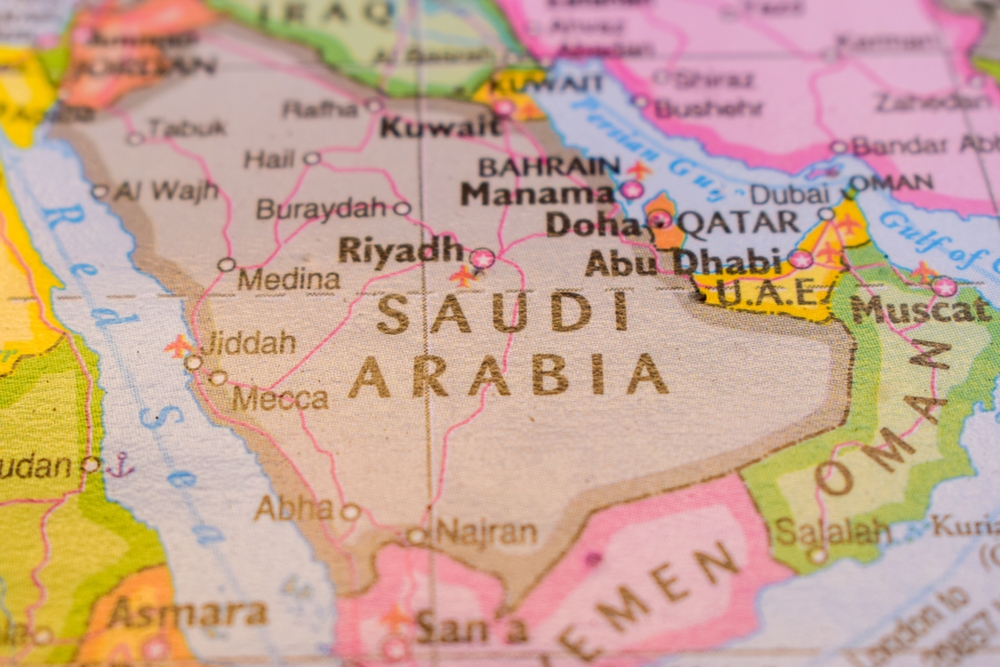
For much of the past two decades, the United Arab Emirates and Saudi Arabia were viewed as having distinct stories. While the UAE was seen as outward-facing and commercially agile, Saudi was viewed as large, resource-rich and more domestically focused. That contrast shaped how the region was seen by investors.
Over the last few years, though, that narrative has evolved. Saudi Arabia has moved quickly, opening sectors that were closed only a few years ago and investing heavily in new industries. The UAE, meanwhile, has continued to fine-tune its business environment, adjusting ownership rules, expanding long-term residency, and introducing corporate tax in line with global standards.
The two countries remain different in character, but their economic paths are now crossing more often. What once felt like parallel development is starting to look more like a partnership.
Parallel Momentum
Reform is gathering pace on both sides at once. Saudi Arabia is moving with scale and intent, while the UAE is reinforcing its established model. Viewed together, the region feels less fragmented than it once did. The Gulf is increasingly seen as a connected commercial space rather than a series of individual plays.
Few expected Saudi Arabia to move this quickly. Markets are opening, and projects such as NEOM are advancing at a scale that has altered regional expectations.
The UAE’s Response
The UAE has not scrambled to keep pace with this recent pace of change. Instead, it has stayed on its existing path, refining what already works and doubling down on stability and continuity.
That steadiness has influenced how the two markets are now viewed. Rather than choosing one base over another, Riyadh and Dubai are increasingly discussed together, and businesses are planning across both markets as part of a single regional strategy.
Scale And Complementarity
What’s becoming clearer is how the two models fit together. Saudi Arabia offers depth, a large domestic market, significant public investment and room to expand. The UAE offers connectivity, established financial infrastructure, and a mature services base. For businesses operating across both, those strengths sit side by side and increasingly reinforce one another.
This is visible in day-to-day activity. UAE-based firms are participating in Saudi projects, while Saudi capital continues to anchor itself within the UAE’s financial and commercial ecosystem. Companies are building partnerships and management structures that assume activity in both markets. This commercial integration sits alongside deeper government-level coordination, with structured dialogue and joint initiatives reinforcing economic ties.
Of course, competition remains, particularly in attracting global headquarters and high-value sectors. Yet even here, coordination is evident. Energy policy is closely aligned. Diplomatic engagement is often conducted in step, and economic reforms in both countries are moving broadly in the same direction.
For businesses, that alignment makes cross-border expansion more straightforward. Decisions about where to base teams and deploy capital can be taken with greater clarity.
Confidence And Signal
There’s a growing sense of confidence around both markets. Saudi Arabia’s reforms have changed expectations about how quickly the Kingdom can move. The UAE’s steady policy approach has reinforced trust in its model. When business leaders expand into Riyadh while keeping operations in Dubai or Abu Dhabi, it is seen as growth across the region rather than a replacement of one base with another.
Global uncertainty has also influenced this. As companies reassess supply chains and growth priorities, the Gulf is increasingly viewed as a primary hub for secure, large-scale investment. Major public projects continue. Investment activity has not stalled. That continuity, amid volatility elsewhere, has strengthened the region’s international reputation.
Talent, Presence And Leadership Movement
One of the clearest signs of closer ties is the movement of people. Senior executives who once ran regional roles from the UAE are now spending far more time in Riyadh. Some have relocated, while others divide their week between capitals.
Of course, Saudi Arabia’s new regional headquarters requirements have influenced this movement, especially for companies working with the government, but the pull goes beyond compliance. Many executives want to be closer to decision-making and major projects, where commercial priorities are set and contracts are negotiated.
At the same time, the UAE continues to draw international talent, particularly for regional management and finance roles. Leadership is now spread more evenly across Riyadh, Dubai and Abu Dhabi, reflecting where activity is taking place rather than where it once defaulted.
Where senior teams are based shapes where conversations happen and where capital is committed. As more executives divide their time or relocate, commercial focus follows them. The connection between the two markets is increasingly reflected in how companies organise themselves on the ground.
A Regional Mindset
When all these factors are taken together, the direction is clear. The UAE and Saudi Arabia are increasingly viewed as part of a single regional growth story, operating in closer alignment than at any point in recent memory. Trade has deepened, and investment is flowing more freely in both directions, supported by sustained political and economic coordination.
For businesses already established in one market, expansion into the other now feels like a natural extension rather than a separate bet. For new entrants, regional strategy often assumes a presence in both.
The result is a Gulf corridor that feels more cohesive and commercially integrated than before. The ties between the UAE and Saudi Arabia were always strong. What has changed is their
depth, their visibility and the degree to which they now shape business strategy across the region. What once felt like parallel growth now feels like partnership.
About Author