
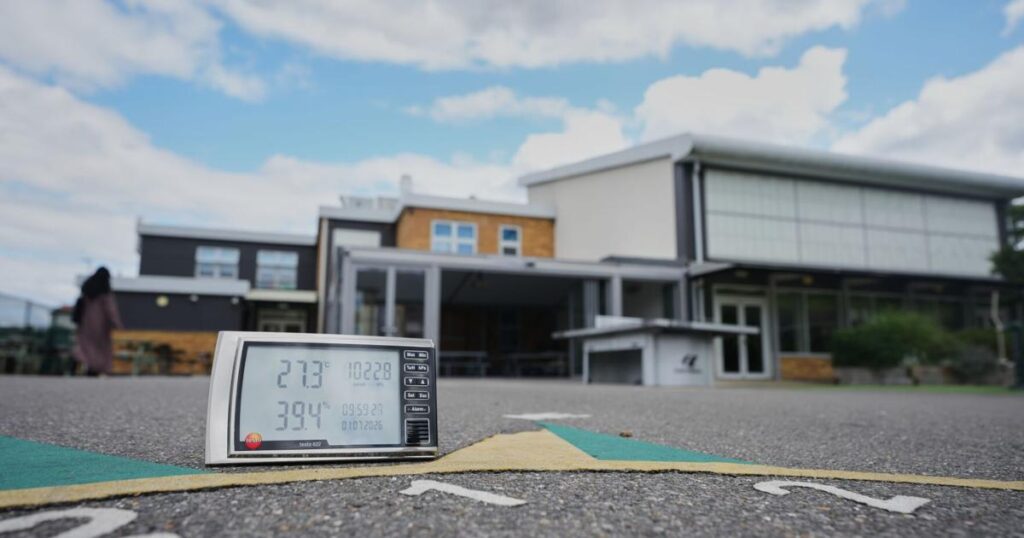
The Welsh school where Mark Morris teaches had to close its doors during Europe’s most recent record-breaking heat wave, much like hundreds of other schools throughout the United Kingdom. Morris claimed that it would have been impossible to teach his design and technology lectures when the temperature reached a record 35.9 degrees Celsius (96.6 Fahrenheit) in Wales since there was no air conditioning, no fans, and bright sunlight entering through windows that don’t open very far—some don’t open at all.
Morris, who instructs high school students in crafts like cooking and woodworking, said, “Even in a normal summer, the heat on those south-facing windows becomes unbearable.” “You don’t need to worry about turning on the oven. Nobody could possibly continue. When temperature records were broken around Europe in late June, more than 1,000 UK schools shuttered for days or sent kids home early, interrupting education and having an effect on the economy as working parents rushed to find childcare.
The school closures, according to experts, have shown how ill-prepared Britain is to deal with what climate scientists refer to as a “new normal” of increasingly frequent and powerful heat waves, with outdated and underfunded public infrastructure like schools, hospitals, and care facilities among the most hit. Building interiors frequently get oppressively hot due to inadequate ventilation, and air conditioning is rare. According to a recent analysis by the British government’s climate consultants, these structures were “built for a climate that no longer exists today”—that is, to stay warm during chilly winters rather than to stay cool during extended hot spells.
Also Read:
US and Iran Hold Talks in Qatar; Vance Vows no Return to War Until Needed
After Khamenei’s Funeral, Mediators Predict Indirect US-Iran Discussions
About Author