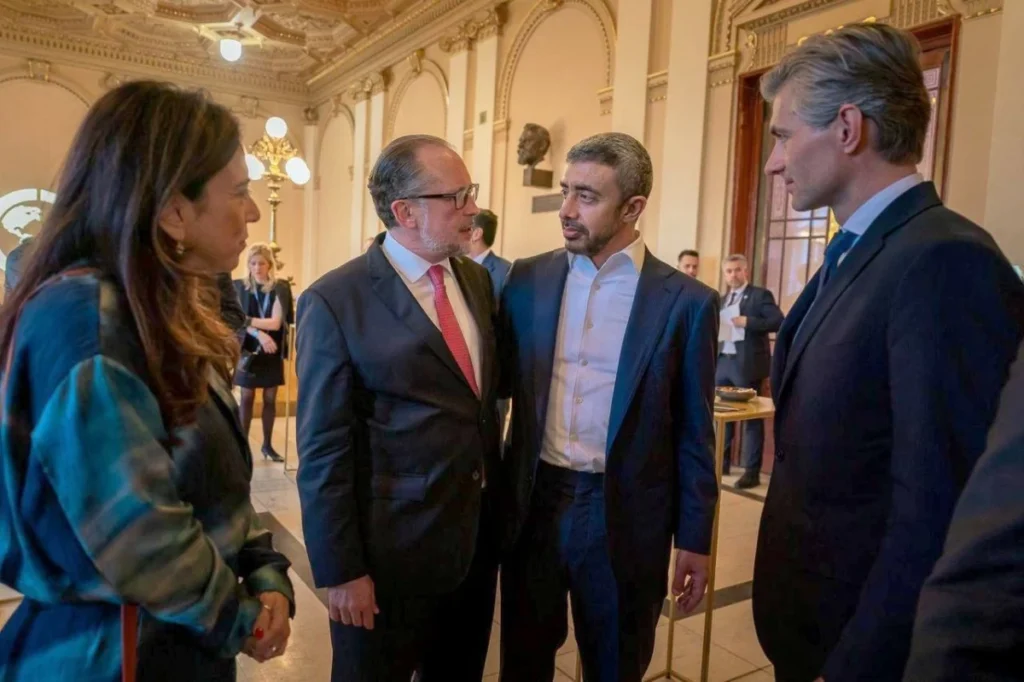
Dr. Thani Bin Ahmed Al Zeyoudi, UAE Minister for Foreign Trade, spoke on the ‘The Ripple Effect: How the Iran War is Shaping Global Economies and Politics’ panel at the GLOBSEC Forum 2026 in Prague, outlining the UAE’s response to the disruption of global trade routes and reaffirming the country’s status as a stable and resilient trade hub.
Addressing senior policymakers, business leaders, and international officials, Al Zeyoudi detailed the UAE’s immediate and structural measures taken since the conflict began, including the activation of alternative trade corridors, such as the UAE’s eastern ports of Fujairah and Khorfakkan, air freight bridges for time-critical pharmaceutical and food cargo, a Green Corridor with Oman, and a new Sharjah-Dammam trade bridge.
Al Zeyoudi further stated that the UAE has established a Dhs1 billion economic support fund to maintain business continuity and targeted relief for SMEs, as well as a Five-Pillar Financial Institution Resilience Package released by the Central Bank to sustain credit flows.
The major redesign of Gulf logistics that we were undertaking over a decade is now being compacted into years,” Al Zeyoudi remarked. “What this time has done is accelerate the timelines of existing plans, and underscore the wisdom of building an open, varied, and resilient trade architecture before it is needed.
Also Read:
Bassel Babbili’s Journey To Shaping Modern Real Estate Advisory
Farah Sajwani | Banking Strategy, Fashion Innovation & Life Coaching In UAE
About Author