
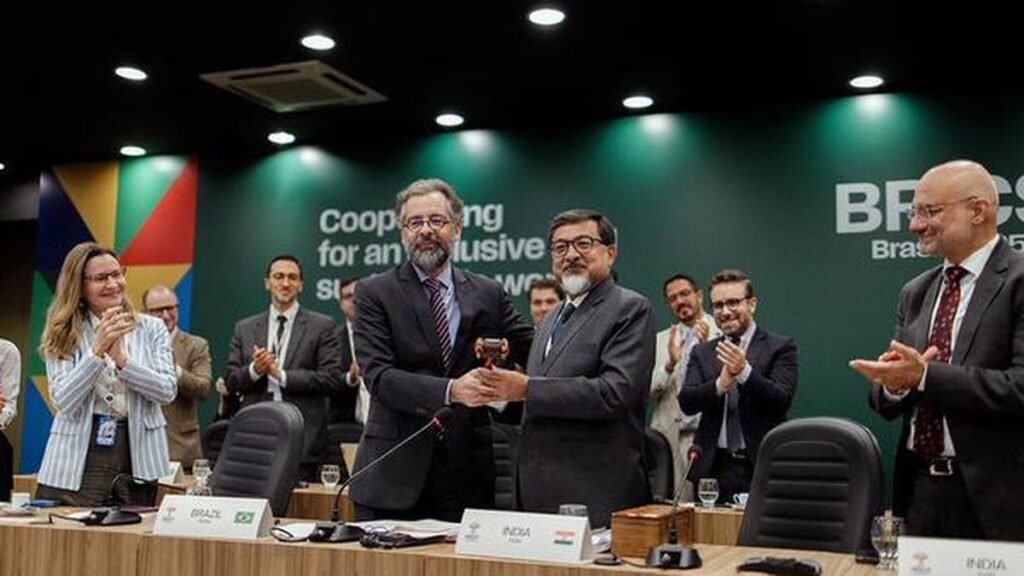
The 18th BRICS Summit in New Delhi is a watershed moment in India-Gulf relations. Regional tensions have heightened concern about energy security, marine trade, and secure shipping across the Strait of Hormuz, as Gulf governments diversify their economies, invest in modern technology, and build commercial ties with Asia.
India is at the intersection of these developments. Its 2026 BRICS chairmanship is strengthening historically strong Gulf relations into a more comprehensive collaboration that includes investment, technology, food security, clean energy, and regional stability.
Saudi Arabia and the UAE represent the Gulf in the expanded BRICS, giving the grouping more weight in global oil and finance while also deepening its ties to West Asia. With strong ties to all six Gulf Cooperation Council governments, India serves as a natural link between the Gulf and the larger BRICS community.
Economic realities underpin this position. India is a significant Gulf commercial partner and energy consumer. Gulf states contribute crude oil, LNG, and petroleum products that are critical to India’s economy, while India provides food, pharmaceuticals, engineering goods, textiles, machinery, and digital services. Millions of Indians living and working in the Gulf form a strong human base.
Also Read:
Modi Laments the 11 Fatalities from Explosions at An Indian Rock Firecracker Factory
With 4.34 Million Seats in September, Dubai Airport has The Highest Capacity in the World
About Author






1 thought on “India’s BRICS Leaders are Creating a new Bridge to the Gulf”