
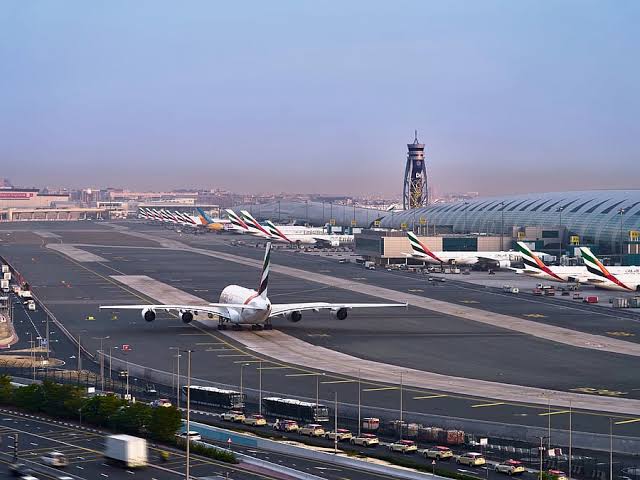
With 4.34 million leaving seats and a total of 8.7 million seats in both directions, Dubai International Airport topped the list of the biggest airports in the world for scheduled seat capacity for international flights in September.
London Heathrow Airport came in second with 4 million seats, according to OAG, a worldwide aviation data supplier. Amsterdam Airport came in fourth place with 3.7 million seats, while Seoul Incheon International Airport came in third with 3.78 million. Istanbul Airport came in fifth with 3.6 million seats.
Singapore Changi Airport ranked sixth with 3.46 million seats. Charles de Gaulle Airport in Paris came in second with 3.45 million. With 3.41 million seats, Frankfurt Airport surpassed Hong Kong International Airport, which ranked tenth with 3.21 million. With 2.7 million seats, Madrid Airport finished in the top ten.
With increased airline operations and the continued recovery of air traffic, Dubai International Airport remains the world’s busiest airport by seat capacity. Increased demand for travel, a resurgence of events, and the arrival of winter are the main drivers of this expansion.
31.5 million travellers passed through Dubai International Airport in the first half of 2026, and the figure continued to rise in the second quarter. In April, there were 3.5 million passengers; in May, 4.5 million; and in June, 5 million. This encouraging trend emphasizes increased aircraft occupancy rates, improved air connectivity, and the return of foreign carriers to Dubai. As the year enters its usually busier second half, these indicators point to continuing demand in key areas.
Also Read:
Meet Talex Maxim: Building Behavioral Intelligence For The Next Generation Of AI
About Author






5 thoughts on “With 4.34 Million Seats in September, Dubai Airport has The Highest Capacity in the World”