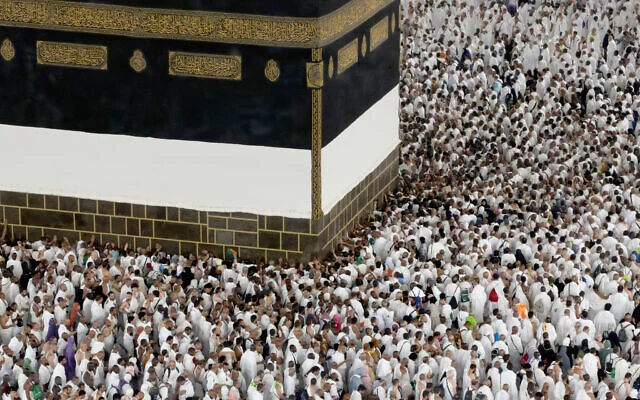
Fadel never wavered in his resolve to fly to Saudi Arabia for this year’s Hajj pilgrimage, even in the face of the Middle East conflict and a travel recommendation from the US government. “Even if the war were still ongoing, I would not have backed out,” the 49-year-old American told AFP, requesting that only his first name be used. He said, citing a verse from the Holy Quran, “We are undoubtedly in the safest place in the world.” Many Muslims from Western countries who have traveled to Saudi Arabia for the Hajj following the catastrophic Middle East conflict share this sentiment.
In the Holy City of Makkah, pilgrims arrive on the grounds of the Kaaba at the Grand Mosque complex. AFP
Following waves of Iranian strikes on targets in Saudi Arabia and its Gulf neighbors following the United States and Israel’s onslaught on the Islamic republic in late February, this year’s ceremonies attract Muslim worshippers from all over the world.
Despite unsuccessful negotiations between the United States and Iran, an uneasy ceasefire has been in place for the most part since April. Both sides said on Saturday that an agreement might be reached shortly, but there were still concerns that fighting might break out again at any time. Last month, the US embassy in Riyadh cautioned US citizens from performing the Hajj due to the uncertainties.
Also Read:
During the Eid Al Adha Holidays, Abu Dhabi Offers Free Parking and no Darb Fees
Bassel Babbili’s Journey to Shaping Modern Real Estate Advisory
About Author