
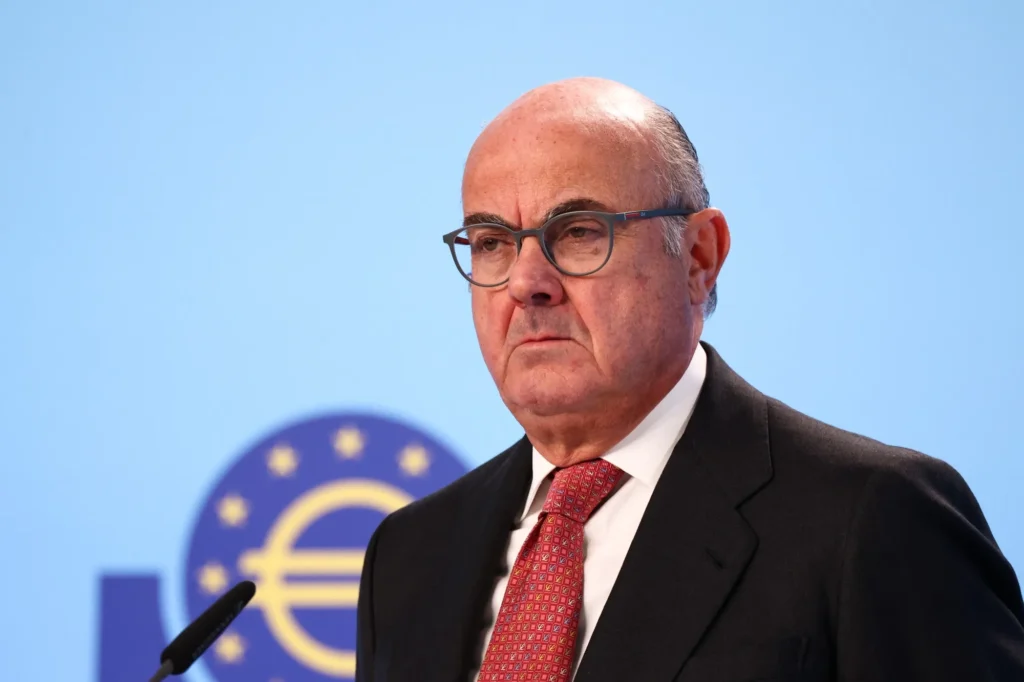
The European Central Bank’s Vice President, Luis de Guindos, stated that while Eurozone banks have minimal direct exposure to the Middle East crisis, it may nonetheless cause systemic stress due to interrelated vulnerabilities. The US and Israeli attack on Iran has caused financial market stress, although the selloff has been confined outside of the Middle East. However, some assets remain overvalued.In a speech, de Guindos stated that spillovers to the eurozone banking sector have been controlled thus far. “Direct bank exposures to the region are limited, and the banking system is well positioned with strong profitability and robust capital and liquidity buffers.”
According to De Guindos, even market infrastructure operators, such as central counterparties that provide services in energy markets, have successfully managed margin requirements despite volatility. According to de Guindos, who monitors financial stability at the ECB, there is a greater risk due to the financial system’s interconnectedness.The dispute might exacerbate global uncertainty and increase systemic stress, according to the speaker.
The battle could destabilize market sentiment at a time when asset valuations are high, potentially leading to a rapid repricing of risk for leveraged borrowers and sovereigns while intensifying stress in the non-bank financial sector, he warned. De Guindos reiterated the ECB’s warning that the conflict could cause inflation and hamper development, but emphasized the need for additional time to fully assess its impact.”We remain committed to achieving our 2% inflation target in the medium term,” he said.
Also Read:
Abu Dhabi Experiences Heavy Rain for the Second Consecutive Day
Mohamed and Faris Offer Prayers for the Safety and Security of the UAE
About Author