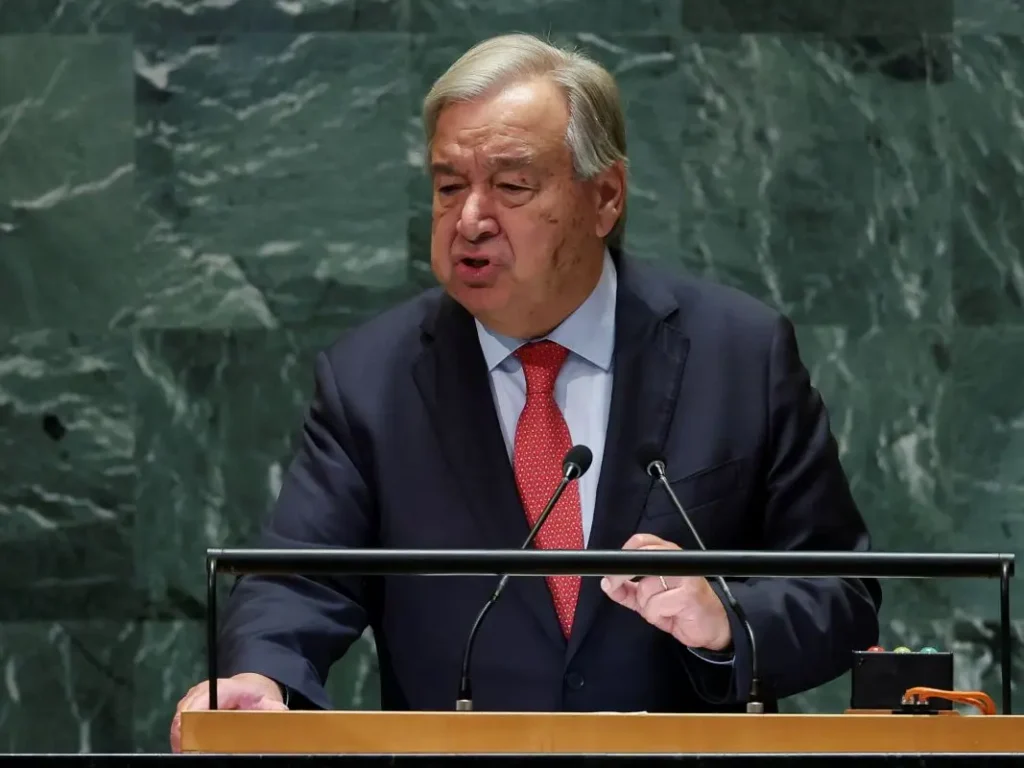
When the 8,100-person UN peacekeeping force in southern Lebanon expires on December 31, the UN president has suggested three ways to assist put an end to the decades-long conflict between Israel and Hizbollah insurgents in Lebanon, who are backed by Iran. All of the options put forth by Secretary-General Antonio Guterres to the UN Security Council would strengthen political efforts to put an end to the fighting that has continued despite a nominal ceasefire, support Lebanese forces in their deployment throughout the nation, and maintain UN military monitoring of the border between Israel and Lebanon.
For many years, UN forces have been crucial in keeping an eye on the security situation in southern Lebanon, a bastion of Hizbollah. In recent months, six peacekeepers have lost their lives. In August 2025, the Security Council unanimously decided to end the UNFIL peacekeeping mission and asked Guterres to provide options for carrying out a 2006 resolution that put an end to a month-long conflict between Israel and Hizbollah, caving in to pressure from the United States and its close ally Israel.
The resolution calls for the disarmament of Hezbollah, the withdrawal of Israeli soldiers, and the deployment of the Lebanese army as the only armed force in the nation. All of this has not occurred. Guterres stated in his letter to the Security Council on Monday that the ongoing conflicts between Israel and Hezbollah demonstrate the necessity of putting the 2006 resolution—which serves as the foundation for peace—into practice. UN military surveillance of the Blue Line, the UN-drawn border between Israel and Lebanon, is “paramount,” according to the secretary-general.
Also Read:
Soaring Prices Threaten Travel to Tourism-Affected Countries
Al Ain Court Ordered the Corporation to pay Dhs185,000 in Outstanding Salaries to Employees
About Author