Business growth rarely happens by chance. It takes clear direction, informed decisions, the ability to recognise opportunities, and leaders who can turn challenges into progress. Across industries, influential individuals are shaping organisations, strengthening business strategies, and creating new pathways for long-term success.
In today’s competitive business environment, strong leadership plays a vital role in driving innovation, building lasting relationships, and achieving sustainable growth. The right vision, combined with consistent action, can make a meaningful difference to both businesses and the industries they serve.
This edition of Top Influential Leaders Driving Business Growth recognises individuals whose leadership, professional achievements, and strategic thinking are contributing to business development and industry advancement.
Meet the Top Influential Leaders Driving Business Growth
In this section, we highlight influential leaders whose experience, achievements, and business vision are helping organisations grow, adapt, and succeed in an evolving global marketplace.
Dr. Menashe (John) Cohen | Redefining International Arbitration Through Legal Expertise, Business Leadership and Innovation

Dr. Menashe (John) Cohen is an international arbitrator, legal scholar, and business leader whose work brings together legal knowledge, business experience, and a practical understanding of dispute resolution. Rather than looking at arbitration only through a legal lens, he considers the commercial realities behind complex disputes and the practical ways of solving such disputes.
His business perspective comes from years of entrepreneurship and management. Cohen founded and built Israel’s leading legal education and professional training group, developing it into a major organization serving generations of lawyers and legal professionals. Building companies, managing teams, and making difficult commercial decisions gave him an understanding of business that now informs his work as an arbitrator.
His legal and academic career is equally distinguished. A lawyer and legal scholar with a PhD in Law, Cohen has taught generations of law students and lawyers and regularly lectures on arbitration, contracts, civil procedure, and dispute resolution. His experience allows him to approach a dispute as more than a legal question. He looks at the wider business circumstances and the practical consequences of the outcome.
Today, Cohen serves as President of the Israeli Institute of Commercial Arbitration (IICA), Israel’s central arbitration institution. During his leadership, the IICA has expanded its international activity, introduced new arbitration mechanisms and specialized professional divisions, and developed procedures designed around the needs of businesses and legal counsel.
For Cohen, effective arbitration requires more than a strong understanding of the law. It requires efficiency, sound judgment, commercial awareness, and a clear understanding of the dispute itself. Technology also has a place in modern arbitration, provided it serves the process rather than complicates it.
His work is increasingly connected to the international arbitration community, with professional relationships extending across Europe, the Middle East, and Asia. He brings to these relationships the same practical outlook that has shaped his career.
At the heart of Dr. Cohen’s approach is a straightforward belief: an arbitrator should understand the transaction, the industry, and the business reality behind a dispute. Legal expertise provides the foundation, but experience and judgment help turn that expertise into a fair, efficient, and credible resolution.
Connecting Global Investors to the Best Investment Options across Dubai | Marcela Roldán

The real estate sector of Dubai is a global investment hub, but making the right investment decision might not be an easy task. However, with guidance from leaders like Marcela Roldán, this problem can easily be solved.
With nearly a decade of experience in this sector, she currently leads as the CEO of Abitare Realty – InviertenDubai, one of the leading Spanish-speaking real estate agencies in Dubai. Connecting investors from across the globe, she guides her clients through every step of the investment process. From creating bilingual content that explains the market clearly to representing Abitare Realty at key industry events, Marcela is an influential voice leading the company.
Designed as a single-stop solution for every real estate investment need, the team at Abitare takes care of the entire process. As one of the trusted names in the industry, the company offers transparency and security, helping every client invest with confidence and clarity.
Alongside her executive role, Marcela is also a Certified Advisory Board Chair and an international speaker on real estate, PropTech, and leadership.
Over the years, Marcela has been actively working to deliver exceptional service to her clients, aligned with her client-first approach. With trust and integrity as the core values of her leadership, her focus has always been on building long-term relationships. Drawing on 20 years of overall sales experience, Marcela is one of the best when it comes to connecting people and businesses with the best investment opportunities.
A strong advocate for innovation, she actively adapts to technological advancements, ensuring the company stays ahead of the curve. Building and leading high-performance agent teams, Marcela believes in growing along with her team.
As a leader who can turn strategies into results, Marcela Roldán is shaping the real estate investment sector with Abitare Realty.
LinkedIn | Instagram | Website
Ahmad Khalaf | The Decisions Behind Real Estate Development

A successful real estate development is rarely defined by its architecture alone. Long before construction begins, decisions about location, demand, investment, design and commercial viability determine whether a project can deliver on its promise. Ahmad Khalaf has spent more than 25 years working at this intersection of strategy and execution across the UAE, GCC and wider MENA. As a real estate development and investment executive and adviser to boards and CEOs, he has contributed to development and investment programmes with aggregate exposure exceeding US$30 billion, spanning hospitality, residential, commercial and mixed-use assets.
Much of Khalaf’s work centres on questions that owners and investors must answer before committing significant capital. What should a site become? Does the market support the proposed concept? Should an asset be developed, repositioned, leased, or sold? His advisory work brings these questions into a wider commercial framework, combining market research, feasibility, financial modelling, capital planning, and development strategy. Since establishing Ahmad Khalaf Advisory in 2015, he has advised high-net-worth individuals and family offices on strategies covering more than US$3 billion, including a 23-hotel portfolio valued at approximately US$1.3 billion.
His experience also includes projects that extend well beyond individual buildings. During his time with National Holding and Bloom Holding in Abu Dhabi, Khalaf directed strategy and business development across a mixed-use portfolio exceeding US$30 billion. He originated and advanced major development initiatives in Iraq, including Shores of Karbala, covering approximately 20 square kilometres, and Future City Baghdad, a proposed five-square-kilometre development. The work involved development planning, feasibility, public-private partnership structures, government engagement and negotiations, with development instruments concluded across the two projects covering 25 square kilometres.
In Jordan, Khalaf brought a similar focus on commercial performance to his role as Senior Vice President of Real Estate at Capital Bank. He led the transformation of an institutional portfolio valued at US$150 million, increasing annual property disposal value by approximately 350% and reducing average annual operating expenditure by 30%. He also directed the refurbishment and conversion of an acquired building into the bank’s headquarters, managing the work in-house and completing it below the approved budget and ahead of the original programme. The role required balancing asset performance with the bank’s wider operational needs and business continuity.
His more recent mandates show the range of decisions involved in development advisory. In Baghdad, he presented the investment case for a four-star-plus IntercityHotel, securing board approval of the concept and progressing research, feasibility, and operator negotiations. In Oman, he advised on repositioning a proposed mixed-use development into a modular data centre hub, with a proposed investment of US$300 million. Other assignments have covered hotel portfolio repositioning, retail mall performance, education developments, and logistics investment planning. Each requires a different response, but the underlying discipline remains the same: test the opportunity, understand the market, and build a sound route from strategy to delivery.
For Khalaf, real estate advisory is ultimately about helping owners make informed decisions with long-term consequences. A development may have an attractive concept and substantial capital behind it, but its success depends on whether the commercial model, market demand, and execution plan work together. Across his work in the region, he has combined investment analysis with negotiations, specialist coordination, and owner-side oversight. As development markets become more complex, that ability to connect the financial case with the realities of delivery remains central to creating assets that perform beyond the initial investment.
Pamela Quinzi | Making Individuality Her Signature in Fashion

Pamela Quinzi has built her fashion identity around a simple idea: standing out is more interesting than fitting in. Known for her distinctive Cinderella Shoes and expressive designs, she has developed an aesthetic that brings together glamour, fantasy and individuality. Her creations favour striking silhouettes, intricate details and a sense of drama, giving her work a recognisable character in an industry where trends can change almost overnight.
What makes Quinzi’s approach interesting is the way she treats fashion as an extension of personality. Her designs are not simply about what someone wears, but how they want to present themselves. There is a theatrical quality to her work, yet the details remain central to the overall design. Rather than adapting her aesthetic to every new trend, she has continued to develop a style that reflects her own creative instincts. That consistency has become an important part of her identity as a designer.
Her Cinderella Shoes are perhaps the clearest expression of this approach. Inspired by the idea of transformation, the designs bring a familiar fairytale concept into contemporary fashion. They combine decorative elements with bold styling, creating footwear intended to become the centre of an outfit rather than a finishing touch. For Quinzi, the appeal lies in making something memorable, a piece that allows the wearer to express confidence and personality through fashion.
Over time, Pamela Quinzi has extended her creative presence beyond individual designs, building a fashion identity that connects with audiences across different markets. Her work draws on the visual language of glamour while leaving room for experimentation and personal expression. This balance has helped shape a brand that feels closely connected to its creator. Her distinctive aesthetic carries through the designs, the presentation and the way she communicates with her audience.
Social media has also become part of how Quinzi presents her creative world. Through Instagram and other digital platforms, she shares more than finished products, giving followers a view of the personality and visual influences behind her work. In a fashion industry where designers increasingly communicate directly with their audiences, this connection allows her creative identity to extend beyond collections and into a broader conversation about style.
There is something deliberate about Quinzi’s refusal to make her designs disappear into the background. While much of fashion revolves around seasonal changes and shifting preferences, her work continues to explore the appeal of statement pieces and personal style. For Pamela Quinzi, fashion remains a way to make an impression, express individuality and turn an everyday accessory into something worth remembering.
LinkedIn | Website | Instagram | Facebook | Kilame | Melapa Boutique
Monica Janus: Rethinking How Financial Institutions Work

Financial institutions operate through complex networks of people, processes, technology and controls. Managing that complexity is part of the job, but Monica Janus believes it should not become an excuse for inefficiency. With two decades of international leadership experience across Europe and the United States, she has built her career around challenging established operating models, improving performance and making large organisations work more effectively.
Her experience spans investment operations, fund administration, middle office, financial and regulatory reporting, OTC derivatives and global markets. Across these areas, Janus has led multi-country teams, developed new capabilities and taken responsibility for operations that required significant change. Her approach is grounded in a clear principle: organisations do not always need additional layers of management or more resources. Often, they need simpler processes, stronger accountability and a better understanding of how work gets done.
At State Street, where she most recently served as EMEA Head of Financial Reporting and Poland Head of Fund Administration, Janus held executive responsibility across several European markets and led an organisation of more than 400 professionals. A major part of her remit was strengthening Poland’s position as a strategic global delivery hub while improving operational performance across the region. This involved standardising processes, redesigning delivery models and making better use of technology to support a more consistent operating structure.
The results included bringing previously challenged areas back to strong performance, significantly reducing employee attrition and improving operational efficiency. Simplification and automation played an important role, but so did the work of building stronger teams and establishing clearer responsibilities. As a member of State Street Poland’s Senior Management Committee, Janus also contributed to broader decisions on the organisation’s long-term operating model and location strategy.
Her perspective on transformation extends to the growing role of artificial intelligence in financial services. For Janus, technology can create substantial opportunities, but introducing new tools does not automatically improve an organisation. The starting point must be understanding what needs to change, removing unnecessary complexity and establishing an operating model that allows people and technology to work effectively together. As she puts it, “Most organizations don’t need more people or more controls. They need simpler operating models, clearer accountability, and better use of technology.”
Janus is also passionate about developing future leaders and advancing women’s representation in senior positions. Her experience leading large, international teams has reinforced her belief that lasting performance depends on more than processes and systems. It requires capable people, clear direction and an environment where teams can take ownership of their work. Her view of leadership brings these elements together: question established ways of working, make accountability meaningful and use technology with a clear purpose. In an industry facing constant regulatory, operational and technological change, Monica Janus continues to make a case for a different kind of transformation, one that begins by making business simpler.
Jose Antonio Del Valle Torres: Challenging Business Norms and Standing for Change

Building a business is challenging enough. Challenging the systems around it requires a different kind of determination. Mexican entrepreneur, journalist and human rights advocate Jose Antonio Del Valle Torres has built his career across both worlds. As the founder of GO GABA, a functional beverage brand focused on cognitive wellness, he entered the consumer products industry with an innovative concept. His journey later took an unexpected turn into a high-profile legal dispute involving The Coca-Cola Company, while his work in social advocacy led him to establish Solidaridad Valiente, a movement focused on human rights, anti-corruption and social justice in Mexico.
With GO GABA, Del Valle Torres set out to bring a different proposition to the beverage market. The brand’s functional, brain-focused concept distinguished it from conventional drinks and earned recognition from organisations including Google, the Mexican Ministry of Economy and the French Chamber of Commerce. These acknowledgements included recognition for its potential, growth and innovation. For Del Valle Torres, building the brand was not simply about introducing another beverage. It was about taking an original idea into a competitive market and demonstrating its commercial potential.
His business journey also brought him into discussions involving The Coca-Cola Company through BBVA. What followed became a significant chapter in his entrepreneurial career. Del Valle Torres filed a criminal complaint alleging trade secret theft and fraud, bringing attention to his account of the dispute and the challenges faced by independent entrepreneurs when dealing with multinational corporations. The case raised broader questions about intellectual property, corporate influence and the ability of smaller businesses to protect their interests when facing organisations with considerably greater resources.
His experience in business also informed his decision to establish Solidaridad Valiente in 2021. The movement was created as a civic response to concerns around corruption, violence, institutional accountability and access to justice in Mexico. Through awareness campaigns, public storytelling and civic publications, it seeks to draw attention to the experiences of ordinary citizens and encourage wider discussion around human rights and social justice. Its work reflects Del Valle Torres’s interest in using public platforms not only to build businesses, but also to address issues affecting society.
His contributions across business and civic life have also received international recognition. Among the honours attributed to him are the US Presidential Award for Outstanding Economic Achievement and the World Leader Businessperson recognition from the World Confederation of Businesses. These distinctions sit alongside the earlier recognition received by GO GABA, reflecting the different areas in which he has sought to make an impact.
For Del Valle Torres, entrepreneurship and social responsibility are not separate pursuits. His experience with GO GABA, his legal challenge and the creation of Solidaridad Valiente have shaped a journey that extends beyond commercial success. He continues to use business, public communication and civic advocacy to question established practices and bring attention to issues he believes deserve greater scrutiny. His story reflects a belief that building something meaningful can involve not only creating a new product, but also standing up for the principles behind it.
Dr. Ruchi Mishra Sharma: Exploring the Connection Between Healing and Personal Transformation

Personal transformation often begins with questions that are difficult to voice. Why do certain experiences continue to shape our decisions? What keeps people from recognising their own worth? And how can someone move beyond patterns that have followed them for years? These questions sit at the centre of Dr. Ruchi Mishra Sharma’s work, which brings together her healthcare background, hypnotherapy and an interest in the deeper aspects of human behaviour. Through her practice, Freedom and Empowerment Hypnotherapy with Ruchi, she works with individuals, particularly women, seeking greater self-awareness and a different relationship with their past.
Her approach draws on Rapid Transformational Therapy (RTT), alongside mindset work and spiritual insight. Rather than focusing only on the challenges people experience in the present, her work explores the beliefs and emotional patterns that may influence how they see themselves and approach life. Feelings of guilt, fear and self-doubt can affect personal choices in ways that are not always immediately recognised. Ruchi’s sessions provide a setting for clients to examine these experiences and consider new ways of moving forward.
Women’s emotional empowerment is a central part of her practice. She works with women navigating questions of confidence, self-worth and personal identity, as well as those carrying the emotional weight associated with difficult childhood experiences. Her work also addresses the guilt and shame that can follow childhood sexual abuse, with an emphasis on helping survivors reclaim their sense of agency and make choices on their own terms. These are deeply personal experiences, and her approach places importance on creating space for individuals to explore them without judgement.
For Ruchi, transformation is not simply about feeling better in the moment. It is also about developing a clearer understanding of oneself and making decisions that reflect one’s needs and values. Through individual sessions and guided processes, she encourages clients to question long-held assumptions and recognise patterns that may no longer serve them. The wider aim is to support greater emotional resilience and a stronger sense of personal direction.
Beyond her practice, Dr. Ruchi Mishra Sharma is also an author and speaker, sharing perspectives on healing, personal growth and self-empowerment. Her work brings clinical understanding into conversation with intuitive and spiritual perspectives, reaching audiences interested in exploring the relationship between emotional wellbeing and personal development. Through her writing and public presence, she continues to extend these conversations beyond one-to-one sessions.
At the heart of Ruchi’s work is the belief that difficult experiences need not define the rest of a person’s life. Her focus on women’s transformation reflects a wider interest in helping individuals recognise their own strength and make room for change. Through Freedom and Empowerment Hypnotherapy, she is building a practice around self-understanding, personal choice and the possibility of approaching the future with greater confidence.
Dr. Sobhi Sulieman Agha | Shaping the Business of Marketing
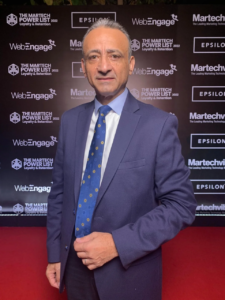
Marketing has changed considerably over the past three decades. The way businesses reach audiences, build trust and communicate their value continues to evolve, but the need for a clear strategy remains. Dr. Sobhi Sulieman Agha has spent more than 30 years working across this changing landscape, combining traditional marketing experience with digital strategy, business development and corporate communications. As Group Chief Marketing Officer at SAB Investment KSA, he brings this experience to the real estate and investment sector, where market positioning and strong business relationships play an important role.
At SAB Investment KSA, Agha leads marketing communications, business development and digital strategy. His work involves connecting the company’s commercial objectives with its market presence and wider growth plans. The firm has worked with more than 20 strategic partners globally and been involved in over 1,000 projects across construction and real estate development. These activities reflect the scale of the business and the importance of coordinated marketing and commercial strategy in a competitive property market.
His approach to marketing is also informed by a strong academic background. Agha holds two PhDs in International Economics from Louisiana State University, alongside a doctorate in Business Management from the European International University in Paris. He is also a speaker, sharing his perspectives at events covering real estate, marketing and business leadership. His work across these areas gives him a broader view of how economic conditions, business decisions and communication strategies influence one another.
Beyond his corporate responsibilities, Agha has maintained a strong interest in writing and public discussion. His book, The Truth About The Lies: The Real Thing, examines how misinformation can influence people’s thinking and understanding of the world. Through the book, he seeks to encourage readers to question the information they encounter and develop a more informed perspective. His stated ambition is to foster an informed, conscious and connected society, extending his interest in communication beyond the commercial world.
Agha’s professional commitments also include serving as a Board Advisor at Sudaco Group and an Advisory Board Member at CMO Council. His contributions have received recognition through a Lifetime Achievement award at the International Brilliance Awards and a nomination for the International Prime Awards 2025 in Dubai. These roles and acknowledgements reflect his involvement in both business leadership and the wider marketing community.
For Dr. Sobhi Sulieman Agha, effective marketing is about more than visibility or keeping pace with new platforms. It requires an understanding of business, the ability to communicate with purpose and the judgement to recognise how markets are changing. Across his corporate work, academic interests and writing, he continues to explore the influence of communication on business and society. His career reflects a view of marketing not simply as a tool for promoting organisations, but as a discipline that can shape how they think, connect and grow.
Cristina Passione Calò: Building a Fairer Creator Economy

Cristina Passione Calò’s journey into entrepreneurship began with her own experience as a content creator. After building an audience and generating more than one million interactions, she saw the challenges that creators and brands faced when working together. Delayed payments, unclear agreements and campaigns that focused more on numbers than meaningful connections were common problems. Rather than accept these limits, she set out to build a platform that could address them.
As CEO and Co-Founder of Starflare.AI, Cristina is bringing that experience into the technology space. The platform uses AI to simplify influencer marketing and improve how creators and brands connect. Its approach puts creators at the centre of the process, with a focus on clearer systems, fairer partnerships and less reliance on traditional intermediaries.
Building the company came with its own challenges. Cristina describes the first year as a period of learning, adjustment and resilience. Instead of following a fixed startup plan, she focused on solving problems as they emerged and involving her team in the process. She breaks larger challenges into smaller tasks, tests different approaches and makes room for people with different perspectives to contribute.
One of Starflare.AI’s early decisions was to build its creator community before focusing on brand acquisition. The company encouraged influencers to bring other creators onto the platform and rewarded them for helping it grow. This approach led to a reported 30% increase in registrations. By the time the company began reaching out to brands, it had more than 4,000 active creators on its platform.
Cristina’s leadership style reflects the same principles. She believes in working alongside her team rather than leading from a distance. For her, listening, trust and shared responsibility matter as much as the technology behind a product. She also wants to see greater transparency across influencer marketing, particularly in contracts, payments and the way creators are treated in brand partnerships.
With Starflare.AI preparing to raise a $3 million seed round, Cristina is working towards a wider vision for the creator economy. She wants to make influencer marketing more accessible and create a system where creators have greater control over their work. Her experience as a creator continues to shape that ambition, giving her a clear understanding of the problems she wants to solve and the kind of industry she hopes to help build.
Jessica Moini Elom: Redefining What Success Looks Like

Jessica Moini Elom’s career has taken her from leading major commercial deals in the global advertising technology industry to helping professionals build more balanced lives. After close to a decade in corporate leadership, she began to question the cost of success. She had seen high-performing people manage demanding roles while dealing with stress, burnout and constant pressure. That experience led her to shift her focus towards personal development and coaching.
Through The Kindness Catalog, Jessica works with professionals and entrepreneurs who want to grow without neglecting their well-being. Her coaching focuses on emotional awareness, personal clarity and practical habits that support lasting change. She combines her corporate experience with her training as a Certified Life Coach through the Tony Robbins and Chloe Madanes Coaching School, along with her background as a Neuro-Linguistic Programming practitioner.
Her approach is shaped by an understanding of the pressures that come with professional responsibility. Jessica helps clients recognise how their thoughts and emotions influence their decisions, relationships and performance. Through individual coaching, workshops and online programmes, she works with them to build confidence, improve communication and manage stress more effectively.
For Jessica, leadership begins with understanding oneself. She encourages professionals to develop emotional control, make clearer decisions and build habits that support both their work and personal lives. Rather than treating well-being as something separate from career development, she sees it as an important part of sustainable performance.
This perspective also shapes her view of success. Career progress matters, but it should not come at the expense of health, relationships or personal fulfilment. Jessica wants professionals to question the idea that constant pressure is simply part of ambition. Her work encourages them to pursue meaningful goals while making space for the life they want outside their careers.
Today, Jessica Moini Elom continues to guide professionals and entrepreneurs through The Kindness Catalog. Her work is centred on a simple idea: people should not have to choose between professional achievement and personal well-being. By helping them develop greater clarity, resilience and emotional strength, she is encouraging a more balanced way to approach success.
Conclusion
The leaders featured in this edition demonstrate that business growth is built on more than strategy alone. It requires determination, adaptability, forward thinking, and the ability to bring people together around a shared vision.
Their journeys reflect different approaches to leadership, but each offers valuable insights into building successful organisations and creating lasting business impact.
As the business landscape continues to change, these influential leaders stand as examples of the people driving progress, opening new opportunities, and shaping the future of business. Their contributions highlight the importance of leadership in achieving sustainable growth and long-term success.
Also Read:
The Science Behind Better Decisions | Dr. Rainer Pooth
Gulf Cryo Industrial Gases Fuelling Regional Decarbonisation and Competitiveness
About Author