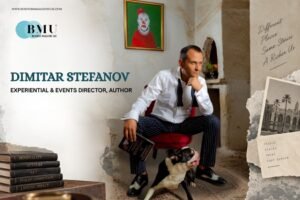
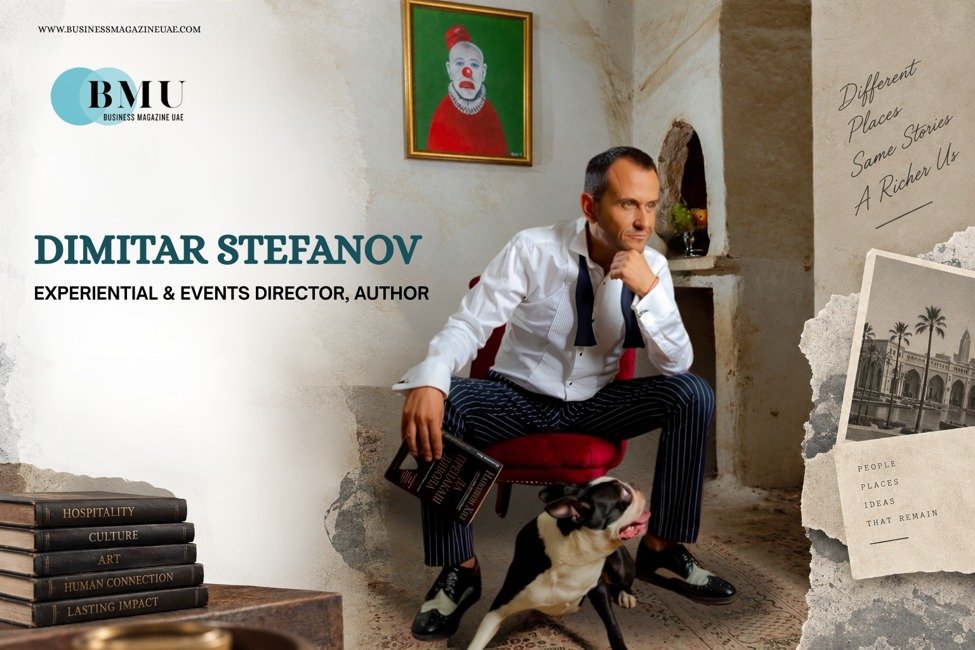
With more than 15 years of international experience across experiential events, artistic direction, luxury hospitality, and live experiences, Dimitar Stefanov has evolved from event production towards creative direction, cultural programming, and the creation of meaningful guest experiences. His work brings together creative direction, storytelling, atmosphere, and precise execution, with a particular focus on how people experience and remember a place or moment.
For Stefanov, the work goes beyond producing events. He is interested in the elements that shape an experience, including human presence, emotional rhythm, atmosphere, and the details that may stay with someone long after the experience itself has ended. This perspective has also influenced his first book, Reflections and Passions: The Things We Allowed Ourselves to Talk About, which began as an extended dialogue between a human being and artificial intelligence and explores questions around choices, relationships, ambitions, losses, faith, and contradictions.
As luxury continues to take on more personal meanings, Stefanov sees increasing value in presence, authenticity, meaning, and emotional memory. His perspective also extends to the UAE and wider Gulf region, where hospitality, culture, creativity, technology, and experience design are increasingly coming together.
The Journey Behind Experience
We began the interview by asking, “Could you walk us through your professional journey and what first drew you towards experiential direction, events, and luxury hospitality?”
Stefanov shared, “Over the past 15 years, my professional journey has developed across experiential events, artistic direction, luxury hospitality, and the creation of meaningful guest experiences. My work has increasingly focused on understanding how atmosphere, human presence, emotional rhythm, and storytelling shape the way people experience and remember something.

My work ranges from high-level institutional and protocol environments to large-scale corporate and family projects, as well as boutique private experiences where discretion is absolute. This range has taught me leadership, adaptability, and calm in crises without losing the quality of the experience.
Over time, I realised that my interest was not simply in producing events. It was in understanding what makes an encounter meaningful and how different elements can come together to create an experience that stays with someone. That has become an important part of how I approach my work today.”
Looking Beyond the Event
We then asked, “How has your understanding of experiential direction changed throughout your career?”
He explained, “My understanding has increasingly moved beyond the event itself. Producing an event is one part of the work, but the experience of the guest is something broader.
I have become more interested in atmosphere, human presence, emotional rhythm, and storytelling. These elements influence how people experience a place and what they remember afterwards. Sometimes, it is not the most obvious part of an experience that stays with us. It can be a particular atmosphere, a quiet moment, a conversation, or an image.
This is something I have been thinking about both professionally and personally. Certain stories and emotions can remain somewhere within us before we fully understand why. Then, at another point in life, they may return, and we see them differently.
For me, this is part of what makes experience design interesting. We cannot always know what someone will remember, but we can be thoughtful about the environment and the moments we create.”
The Changing Meaning of Luxury
Interested in his perspective on the evolution of luxury, we asked, “How do you see the meaning of luxury changing, particularly within hospitality and experiential environments?”
Stefanov stated, “I believe luxury is becoming more personal. It has traditionally been associated with product, status, comfort, and other visible elements. Those things remain important, but I think there is a growing interest in something beyond them.
Luxury can also be about presence, meaning, authenticity, and emotional memory. The way a person feels in a place can become just as important as the physical elements around them.
For me, the question is not only what we provide, but how the person experiences it. What atmosphere do they encounter? What do they notice? What do they feel? And what remains with them afterwards?
This is why I think understanding people is so important in hospitality and experience design. The details matter, but so does the feeling behind them. As expectations continue to change, I believe there will be greater interest in experiences that feel personal and genuine.”
When Experiences Become Memories
We were interested in Stefanov’s reflections on stories, images, and emotions that stay with us, so we asked, “What role do storytelling and memory play in the experiences you create?”
He added, “I do not believe every story needs to arrive with a conclusion. Sometimes, its value lies in allowing someone to recognise something without immediately being told what it means.
Recently, while watching a film, I found myself recognising moments from my own life. Some were things I had already lived through, while others were things I am still living through. I was not looking for lessons or trying to interpret particular lines. I simply allowed the story to unfold.
It made me think about how certain images, emotions, and ideas remain somewhere within us. A place, a quiet moment, a conversation, or even an image can stay with us without asking to be explained immediately.
I think there is something valuable in leaving space for the individual experience. We do not always need to explain everything. Sometimes, a person needs to return to a story or a memory when they are ready, and only then understand what it meant to them.”
Exploring the Human Side of AI
Turning to his first book, we asked, “Your first book, Reflections and Passions: The Things We Allowed Ourselves to Talk About, began as a dialogue between a human being and artificial intelligence. What led you to explore this form of conversation?”
Stefanov shared, “The book began as an extended dialogue between a human being and artificial intelligence, but it is not a technological book about AI. What interested me was the human being in the presence of AI.
Through this dialogue, I explored choices, fears, relationships, ambitions, losses, faith, contradictions, and other parts of human life. I became interested in what we might discover about ourselves through this new form of dialogue.
The connection between the book and my professional work is quite natural for me. Whether I am creating an experience or writing a book, my interest remains fundamentally the same. It is about the human being and what makes an encounter meaningful.
The technology is part of the context, but the questions are human ones. What do we choose? What do we fear? What do we value? What do we allow ourselves to talk about? These are the things that interested me while writing the book.”
A New Chapter Across the Region
Given the changes taking place across the UAE and wider Gulf region, we asked, “How do you view the growing intersection of hospitality, culture, creativity, technology, and experience design in the region?”
He explained, “I find the transformation taking place across the UAE and the wider Gulf very interesting, particularly because hospitality, culture, creativity, technology, and experience design are increasingly intersecting.
This creates a particularly interesting environment for international collaboration, where different areas of expertise and perspectives can come together to shape experiences with cultural relevance and long-term value.
My own work has always moved between creative direction and structured delivery. Looking ahead, I see strong potential in international environments where hospitality, culture, creativity, and experience can meet.
I am also interested in what this changing environment means for the way people experience places. As the region continues to develop, there are many possibilities for creating experiences that are thoughtful, personal, and connected to the people experiencing them.”
Staying Open to What Comes Next
Lastly, we asked, “As you look ahead, what continues to inspire you, and what would you say to professionals who want to create meaningful work?”
Stefanov stated, “What continues to interest me is the unpredictability of what comes next. The world is changing, and we cannot always know where those changes will lead. I am comfortable with that uncertainty, and I am genuinely interested in change.
I think it is important to remain open, observe what is happening around you, and allow experiences to influence your thinking. Not everything needs to be understood immediately.
For me, meaningful work begins with paying attention to people. Whether you are creating an event, shaping a hospitality experience, or writing, it is worth asking what the person on the other side will feel and what they might take away from the encounter.
Perhaps the most meaningful stories are not always the ones we understand immediately. Sometimes they are the ones we return to when we are ready. I think the same can be true of experiences. We may not know their meaning in the moment, but something can remain with us and reveal itself later.”
Connect with Dimitar Stefanov on LinkedIn
Also Read:-
Creating Visuals That Speak: Mahmoud El Sabbagh
Didin Nasirudin | Bridging Communication, Business & Geopolitical Insight
About Author