
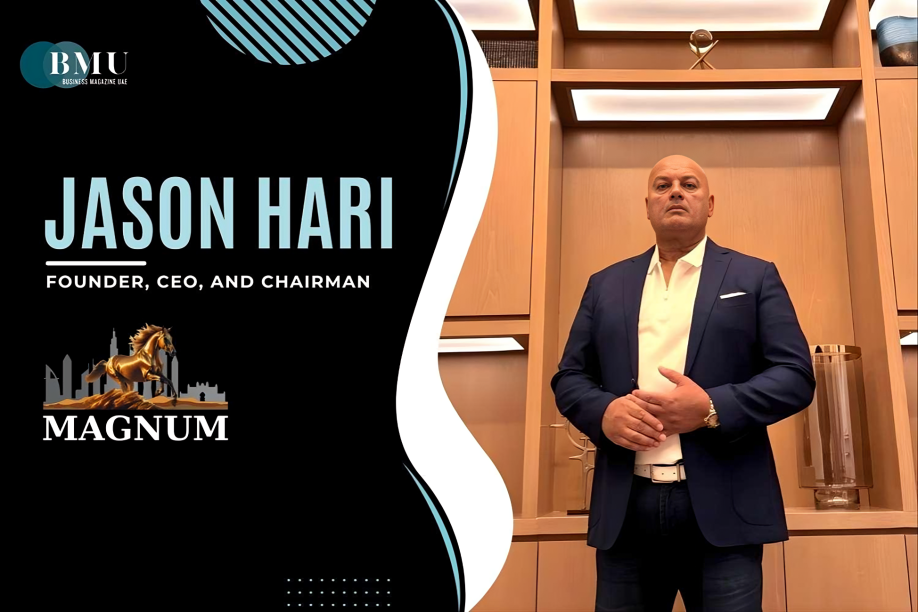
We recently had the opportunity to interview Jason Hari, Founder, CEO, and Chairman of Magnum Equities and Magnum Global (CSP) LLC. With over three decades of experience across commercial real estate, cross-border capital advisory, business equities, and alternative assets, Jason Hari has built a career rooted in discipline, resilience, and long-term value creation.
Through Magnum Equities, he is developing a global capital partnership platform focused on real-world assets, structured profit-share participation, and inclusive access to wealth creation.
Early Foundations and Defining Moments
We began the interview by asking, “How did your professional journey begin, and what key moments shaped where you are today?”
Jason Hari shared, “My entrepreneurial roots go back generations. My family were early settlers in Canada in the early 1900s, and business, mentorship, and long-term thinking were part of our culture.
Professionally, I built my foundation in commercial real estate and business equities. Over the past thirty years, I have worked with international investment groups from India, China, Latin America, and across EMEA who were seeking stable and diversified exposure into Canada and other secure regions.
Working with sovereign wealth funds, UHNW families, multi-family offices, and institutional capital shaped my perspective. I learned early that capital must preserve purchasing power and generate productive returns above inflation over long horizons.
A key turning point was recognizing that traditional investment structures limited participation. That realization ultimately led to Magnum.”
Leading Magnum Equities
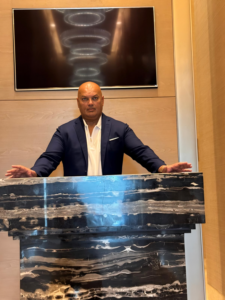
Interested to learn more about his leadership role, we asked, “Can you tell us more about your current role and the organization you lead?”
He explained, “As Founder and CEO of Magnum Equities, my focus is strategic oversight and long-term alignment. Magnum is structured as a legacy-driven capital partnership platform centered on real-world assets.
Our pillars include large-scale real estate, business equities, infrastructure projects, precious metals, and structured alternative investments. We use a fractional profit-share structure that allows global partners to participate in the performance of our aggregate portfolio rather than a single isolated asset.
My role involves guiding governance, international partnerships, and ensuring that our model remains disciplined, compliant, and culturally adaptable across jurisdictions.”
What Sets the Magnum Model Apart
To understand the platform’s differentiation, we asked, “What core services or structures define Magnum, and what makes your model different?”
Jason Hari responded, “Most platforms offer access to individual assets. Magnum provides structured exposure to a diversified portfolio.
We tokenize partnership participation rather than speculation. This reduces concentration risk and aligns partners with overall performance.
We also integrate Shariah-compliant structures such as Sukuk where appropriate and operate under strict KYC and AML standards.
Beyond structure, our distinction lies in philosophy. Capital should support SMEs, infrastructure, and long-term economic stability. Profit and societal benefit should work together.”
Lessons in Leadership and Global Trust
We then asked, “What major challenges have you faced as a leader, and how have you navigated them?”
He reflected, “Building trust across borders is one of the most complex aspects of global capital. Each region operates differently. Regulatory standards differ. Cultural nuances matter.
I learned early that assumptions damage relationships. Listening builds alignment. Cultural intelligence is essential.
Another challenge was introducing innovative structures into a conservative financial landscape. Innovation must respect compliance frameworks. That balance requires patience and clarity of vision.
Leadership is not about speed. It is about resilience and consistency.”
Technology and the Evolution of Capital
Given Magnum’s framework, we asked, “How do you see technology, especially AI and blockchain, shaping your sector?”
Jason Hari shared, “Technology enhances judgment. It does not replace it.”
“AI improves forecasting, behavioral analysis, and capital advisory efficiency. Our Super App integrates predictive tools to assist capital partners in making informed decisions.
Blockchain creates transparency in profit-share distribution and reporting. That transparency strengthens global trust.
However, governance must always guide technology. Tools are only as strong as the principles behind them.” He further added.
The Future of Real-World Asset Investing
To explore broader industry shifts, we asked, “Where do you see your industry heading over the next few years?”
He commented, “Capital allocation is becoming more disciplined and values-aligned. Sovereign wealth funds, family offices, and institutional investors are prioritizing infrastructure, resilience, and diversified exposure to real-world assets.
I also see increased democratisation through fractional participation. Lower barriers to entry will expand access while maintaining institutional standards.
At the same time, many sovereign governments are entering a new phase of economic development. For decades, some sovereign funds primarily deployed capital outward into global markets. Today, there is an increasing focus on attracting inward Foreign Direct Investment (FDI) to support large-scale infrastructure, mega and giga development projects, and public-private partnership initiatives aligned with national visions such as 2030, 2040, and beyond.
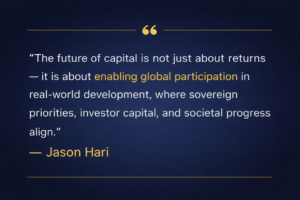
Platforms like Magnum are designed to support that transition by enabling global tokenised capital participation — allowing both micro and institutional investors to participate in funding real-world development projects while sovereign partners maintain strategic oversight and long-horizon alignment. In that sense, technology is not just improving finance — it is expanding how capital can participate in national development.”
Advice for Aspiring Impact Leaders
Lastly, we asked, “What advice would you give to entrepreneurs or professionals seeking to create lasting impact?”
Jason Hari concluded, “Think in decades, not in cycles.
- Align your model with your values. If they conflict, the structure will eventually fail.
- Study human behavior. Respect cultural differences. Trust compounds faster than capital.
- Most importantly, design with legacy in mind. If your model still holds relevance twenty years from now, you are building something meaningful.”
Connect with Jason Hari on LinkedIn to follow his insights on global capital strategy.
Visit Magnum Equities at www.magnumequities.com to learn more.
Read more:
Mehdi Benzaari: Shaping the Future Economy with Sustainability Initiatives
Anis Sfar: A Visionary Strategist in the UAE’s Real Estate Sector
About Author