
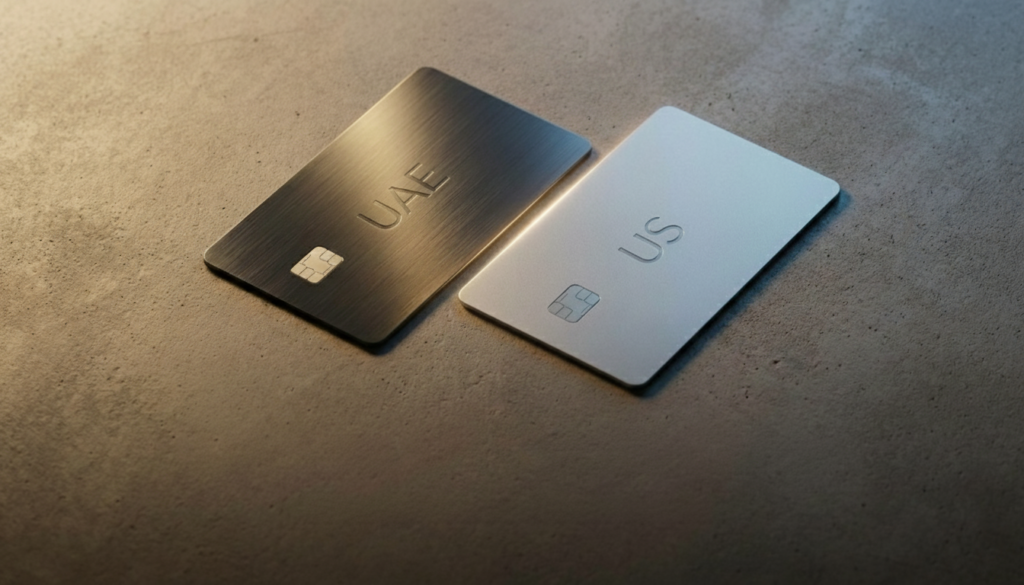
Two Credit Markets, Two Different Experiences
Credit cards in the UAE and US may work the same on the surface, but the experience is shaped by different systems, cultures, and priorities.
In the US, credit cards are deeply embedded in financial life. Most people carry multiple cards tailored to their lifestyle — cashback, travel, student, or business. The market is mature, competitive, and supported by decades of consumer data and regulation.
The UAE, while modern and fast-moving, is still building. Cards are widely used, especially by expats, but most products are issued by a smaller group of banks with similar fee structures and approval rules. There’s less personalization, though things are quickly changing.
Credit History and Card Approvals
In the UAE, you start from zero. Your US credit history doesn’t follow you. Banks rely on local records from Al Etihad Credit Bureau, and many require a salary certificate or job confirmation to issue a card.
In contrast, the US has more entry-level credit cards, including ones for no credit history. You can also build credit through rent, bills, and digital tools. These options aren’t yet common in the UAE.
Rewards and Fees: Different Priorities
US credit cards are known for strong rewards — often offering 3–5% cashback in select categories like groceries, travel, or dining, plus large welcome bonuses for new users. Many also waive foreign transaction fees, and premium cards include perks like lounge access, hotel upgrades, and flexible points redemptions.
UAE cards have improved sharply. While base cashback typically ranges from 1–3%, many cards now offer up to 5–6% in specific categories like fuel, groceries, or telecom. Some co-branded cards push this higher — even 8–10% on partner platforms — especially when tied to spending thresholds. Foreign transaction fees (2–3%) still apply on most UAE cards, unlike in the US.
It’s also important to watch out for charges. UAE cards often come with high late fees and profit rates up to 3.75% per month — much higher than the typical US annual APR.
Protection and Disputes
US law offers strong protection for cardholders. If something goes wrong — fraud, double charges, or disputes — you’re covered by federal law and zero-liability policies. Chargebacks are quick and mostly digital.
In the UAE, fraud protection is improving, but there’s less consistency. Some banks require manual forms to resolve disputes. Alerts and detailed spending breakdowns depend on your bank’s tech — which can vary widely.
UAE Is Catching Up Fast
The UAE credit card space is evolving. Most banks now offer digital applications, biometric ID checks, and faster decisions. Credit scores from Al Etihad Credit Bureau are increasingly used, and fintech tools are helping consumers compare, track, and manage their spending.
A major trend is the rise of co-branded cards. Banks are launching products with airlines, retailers, and delivery apps — offering targeted perks like cashback on Amazon, Noon, or Talabat. These lifestyle-first cards reflect a shift toward more tailored value.
Open Banking is also starting to make an impact. Expect smarter recommendations, real-time payment tools, and rewards that match your spending patterns.
Make Smarter Card Choices in the UAE
To make the most of these changes, visit Kredit — a Dubai-based credit card comparison platform that brings all UAE card offers together in one place. Whether you’re looking for cashback, no fees, or travel rewards, Kredit helps you compare, filter, and apply — all in one spot.
Visit Kredit’s site to explore the top UAE credit card offers and take control of your financial journey in 2026 and beyond.
About Author