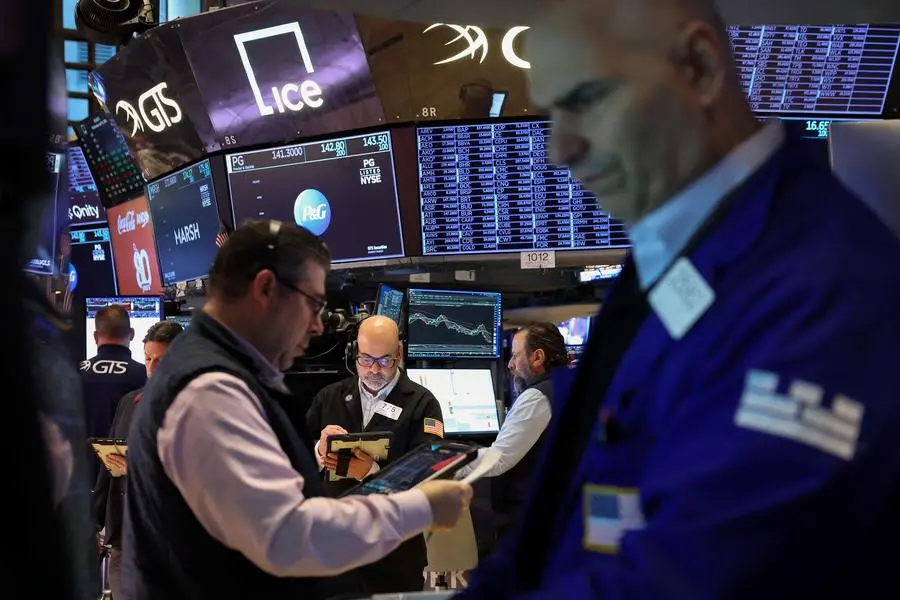
Thursday saw a decline in share markets as fissures in the precarious Gulf truce soon emerged, pushing oil prices back toward $100 per barrel and warning investors that the inflationary consequences would take a long time. Importantly, there was little indication that the Strait of Hormuz was open in any significant sense, as Iran asserted its dominance over the crucial oil route by requesting tolls for safe passage. Social media was used by President Donald Trump to announce that US forces will stay in the Gulf until an agreement was made and followed, failing which the “Shootin’ Starts,” larger, better, and stronger than anyone has ever seen before, would begin.
More than 250 people were killed on Wednesday when Israel launched its most intense attacks on Lebanon since it started fighting the Iran-backed Hezbollah movement last month. Consequently, US WTI futures increased 3.3% to $97.55, Brent crude futures increased 2.5% to $97.28 per barrel, and the pan-European STOXX 600 index opened 0.2% lower after rising 3.7% on Wednesday in response to the truce announcement.
Aside from the significant fluctuations in oil prices, Peter Kinsella, Head of Investment Services UK at UBP, emphasized that volatility in the majority of the major currencies was still minimal. According to Kinsella, “it is very difficult for investors as they are dealing with a conflict where the protagonists don’t even know what they want.” In early trading, European government bond rates, which determine the cost of borrowing, were also slightly rising after falling on Wednesday.
Germany’s industrial production unexpectedly decreased in February, according to data, indicating that even before the Iran war, the largest economy in Europe was muted and headed for another quarter of contraction. Japan’s Nikkei finished 0.7% lower overnight in Asia after rising 5.4% the day before. South Korea saw a 1.6% decline after a 6.8% increase. While MSCI’s broadest index of Asia-Pacific equities outside of Japan slid 0.7%, Chinese blue chips also saw a 0.6% decline. S&P 500 and Nasdaq futures were both down about 0.4% on Wall Street prior to their later restart.
Also Read:
An Australian Soldier was Detained on Suspicion of War Crimes in Afghanistan
As Trump’s Deadline Approaches, Iran Rejects the Ceasefire Agreement
About Author