
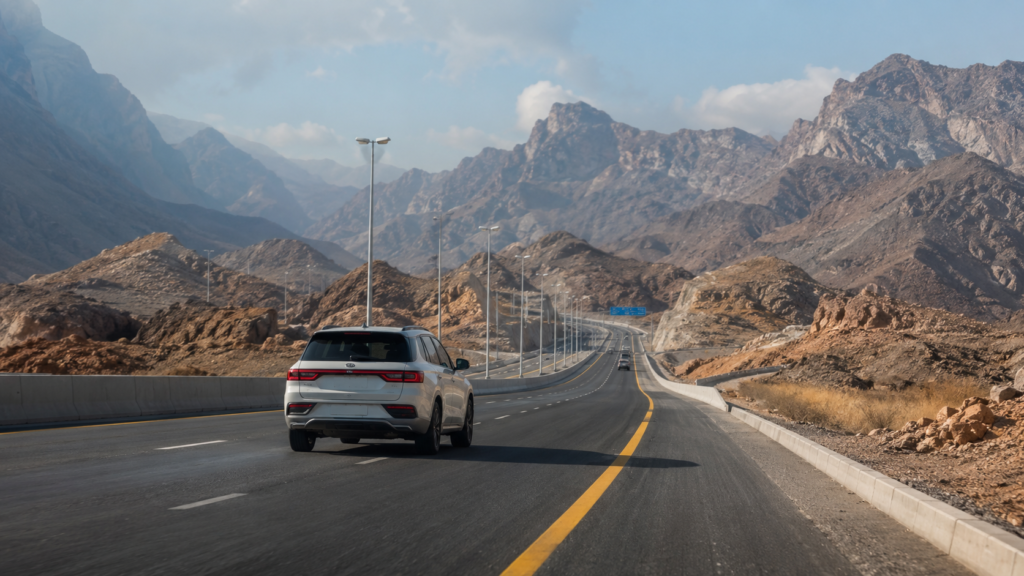
If you’re planning to take a road trip to Oman after your Dubai tour, you’re choosing one of the most scenic and flexible ways to explore the region. Many travelers prefer driving from Dubai to Oman because it offers the freedom to discover mountain landscapes, coastal areas, and cultural attractions at their own pace without being limited by fixed tour schedules.
When traveling by road, choosing the right border crossing can make a big difference in your experience. The UAE has several entry points to Oman, but Hatta and Al Ain are among the most popular options for travelers departing from Dubai. These routes vary in terms of distance, travel time, congestion, and available facilities. In this guide, we’ll compare both borders to help you find the best route for your trip, as well as explain which car rental companies can legally provide car rental Dubai Oman services.
Can You Drive a Rental Car from Dubai to Oman?
Yes, it’s possible, but there’s one important caveat. You can’t just drive across the border in a rental car without an arrangement. You need to use a company that supports cross-border travel. In this case, the company must legally provide car rental Dubai Oman services and issue you with the necessary documents, such as an exit permit, Oman-specific insurance, and a No Objection Certificate (NOC).
Without these documents, you won’t be allowed to cross the border. Professional companies with experience in Cross-border Car Rental UAE usually handle all these steps for you, making the trip easier and less stressful. You will also need other personal documents, which we will mention below.
Hatta Border Crossing: Pros & Cons
Hatta border crossing, also known as the “Emirates-Al Wajajah” border, is the busiest and most popular border crossing for travelers traveling from Dubai to Muscat (the capital of Oman). It directly connects Dubai to the northern coastal highways of Oman.
Pros of Hatta Border Crossing
- Closest route to Muscat: If your main goal is to reach Muscat as quickly as possible, Hatta is the best road option. It takes you directly to the main highway of Oman.
- Excellent and modern roads: The entire route from Dubai to Hatta and then to Muscat is completely dual-lane, with excellent lighting and high-quality asphalt.
- Good amenities: Along this route, you will find numerous petrol stations, shops and rest stops.
Disadvantages of Hatta Border Crossing
- Extremely crowded during holidays: During weekends and public holidays in the UAE, this border becomes extremely crowded and sometimes you have to wait in line for hours to check documents.
- Very strict for rental cars: Due to the high volume of traffic, border officers are even very obsessive about the exit certificates of rental cars.
Al Ain Border Crossing: Pros & Cons
Al Ain has several border crossings, but for tourists and non-Omani vehicles, the Mezyad or Khatm Al Shiklah border crossings are the main ones. Al Ain border crossing is more suitable for those who want to go to the central, southern or western regions of Oman.
Pros of Al Ain Border Crossing
- Quieter and faster: This border usually has much less traffic than Hatta. The paperwork and vehicle inspection process here is usually faster.
- Ideal route for specific destinations: If you plan to go to the historic city of Nizwa, the famous Jabal Al Akhdar mountains, or towards Salalah in the south, Al Ain border crossing is a more direct and better route.
- Excellent coordination with rental companies: Many car rental companies in Dubai prefer or require the Al Ain border crossing for rental cars due to smoother customs coordination.
Disadvantages of Al Ain Border Crossing
- Longer route to Muscat: If your final destination is only Muscat, and you are traveling from north Dubai, choosing the Al Ain border will add about 1 to 1.5 hours to your travel distance and time.
- Fewer amenities on some parts of the route: The roads after the Al Ain border towards central Oman have fewer amenities than the coastal highway at some points.
Hatta vs. Al Ain: Which Border Is Better?
If your priority is a smoother process for rental car paperwork and avoiding long queues at the border, the Al Ain border is the safer choice. However, if you’re heading directly to Muscat and traveling on a weekday, the Hatta border will save you more time. To help you compare these two driving from Dubai to Oman routes at a glance, we’ve summarized their key features in the table below:
| Criteria | Hatta Border | Al Ain Border |
| Distance from Dubai | About 1.5–2 hours | About 2–2.5 hours |
| Estimated travel time to Muscat | About 4–4.5 hours | About 5.5–6 hours |
| Rental car acceptance | Very strict (recommended to check before departure) | Better aligned with rental company policies |
| Traffic level | Higher | Lower |
| Best for Muscat | ⭐⭐⭐⭐⭐ | ⭐⭐⭐⭐ |
| Best for Nizwa & Central Oman | ⭐⭐⭐ | ⭐⭐⭐⭐⭐ |
| Road quality | ⭐⭐⭐⭐⭐ | ⭐⭐⭐⭐ |
| Roadside facilities | Excellent | Good |
| Scenic & mountain views | Excellent | Very good |
If you’re planning a family Dubai to Oman road trip, both routes are excellent options. Just be sure to consider your final destination and your travel dates before deciding.
Documents, Insurance & Rental Requirements
Before you attempt to cross the border, carefully review this checklist of documents. Failure to do so could result in the border police turning you back to Dubai:
1. Personal documents:
- Passport: Must be valid for at least 6 months.
- Omani visa: Tourists and UAE residents (depending on nationality) can enter for up to 14 days without a visa or with a visa on arrival at the airport for a fee of OMR 5.
- Emirates visa/residency card (Emirates ID): You will definitely need it to return to Dubai. Tourists should make sure that their Emirates visa is “multiple entry”.
- Driving license: Valid Emirates license or International Driving Permit (IDP).
2. Vehicle documents (very important):
- Mulkiya: Original copy of the vehicle registration card.
- No Objection Certificate (NOC): This official letter must be issued by the car rental company in your name and confirms that you are allowed to take the car out of the border.
- Oman Insurance (Orange Card): Regular Dubai insurance is not valid in Oman. You must have cross-border insurance, known as the Orange Card.
A very important note for rental cars
For rental cars, Oman insurance must be pre-issued by the rental company. In general, we recommend choosing a car rental Dubai Oman company that provides all the legal services required for the trip. For example, Saadat Rent allows legal travel to Oman for some cars and provides the necessary documents, insurance and permits before the car is delivered to the passengers.
Tips for a Smooth Dubai to Oman Road Trip
Before you leave, here are a few simple tips to make your trip easier:
- Don’t forget the exit fee: When leaving the UAE, you usually have to pay around 35 dirhams per person; it’s best to have a bank card and some cash with you.
- Fill up your tank: Fill up your tank before you reach the border, as petrol stations are often far apart on Oman’s mountainous roads.
- Download offline maps: Some border and mountain routes can be hit by internet outages, so be sure to save your map offline beforehand.
- Take Oman’s driving laws seriously: There are a lot of speed cameras on the roads, and the usual speed limit on highways is 120km/h; drinking and driving is also strictly prohibited.
- Respect the local culture: Dress appropriately in rural areas and respect local customs to make your travel experience more enjoyable.
If you plan to pick up the car in Oman or your plan includes a return trip, reviewing the car rental Oman to Dubai service can help you find out about entry regulations into the UAE, valid insurance, and car rental conditions on the return trip, and have a hassle-free trip.
Conclusion
An Oman road trip by rental car is one of the most exciting travel experiences in the Persian Gulf. If your destination is Muscat and you want to reach Oman faster, Mersat is a better choice. However, if you prefer less crowds, a quieter drive, and better access to central Oman, Mersat Al Ain will be a better option. Ultimately, the most important thing is to choose a company that provides legal cross-border travel, offers valid Omani insurance, and provides you with the necessary documents before you leave. With these in place, you can travel to Oman with confidence.
About Author