
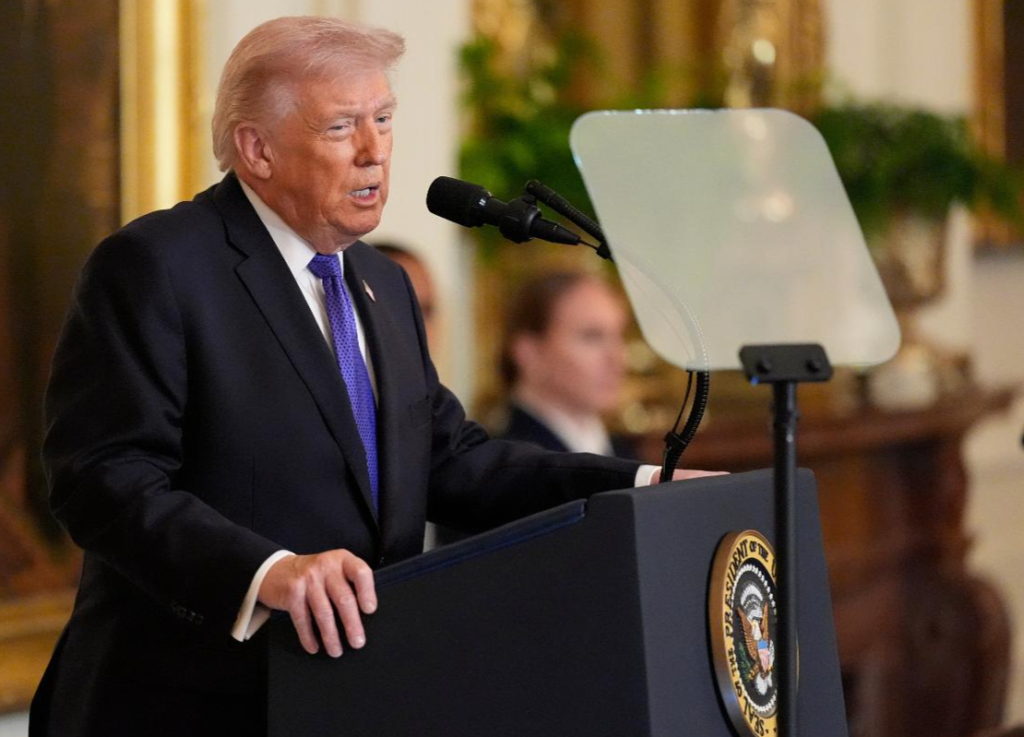
Tuesday saw the dollar stabilize versus key currencies after declining earlier due to remarks made by US President Donald Trump that the conflict in Iran would finish “very soon.” The US dollar was relatively stable in Asian trade at 157.73 yen and $1.1632 per euro, down from Monday’s highs. Concerns that a protracted Iranian conflict would cause a worldwide energy shock threw global markets into a frenzy on Monday.
The Revolutionary Guards of Iran called Trump’s comments “nonsense.” Brent crude futures were trading at $93 per barrel, which is much higher than pre-war levels but still below Monday’s highs of about $120.Rodrigo Catril, senior currency strategist at National Australia Bank in Sydney, stated, “We feel like we haven’t seen the end of the volatility…there’s still the potential for events to trigger bouts of risk aversion.”We’re concerned in the sense that it may not be as simple as just declaring the end of the conflict … and it’s unclear to us if the Iranian regime would be interested in de-escalating,” he said.
The Kiwi dollar dropped 0.4% to $0.5912, while the risk-sensitive Australian dollar lost 0.2% to $0.7063. Since US and Israeli attacks on Iran have virtually stopped oil and gas exports through the Strait of Hormuz, the dollar has been traders’ preferred haven, driving up energy costs. Investors are concerned that this could operate as a tax on business and consumption, slowing down global economy while also discouraging central banks from lowering interest rates.
After declining on Monday, sterling recovered to hold at $1.3434. Larger market withdrawals from riskier assets, according to a Deutsche Bank research on Monday, may necessitate higher oil prices, a change in central banks’ policies, and concrete indications of a wider economic slowdown.
Also Read:
The Indian Government is Taking Steps to Protect Consumers from Rising Oil Prices
Frontline Heroes in The UAE Are Ready to Respond to Emergencies
About Author