
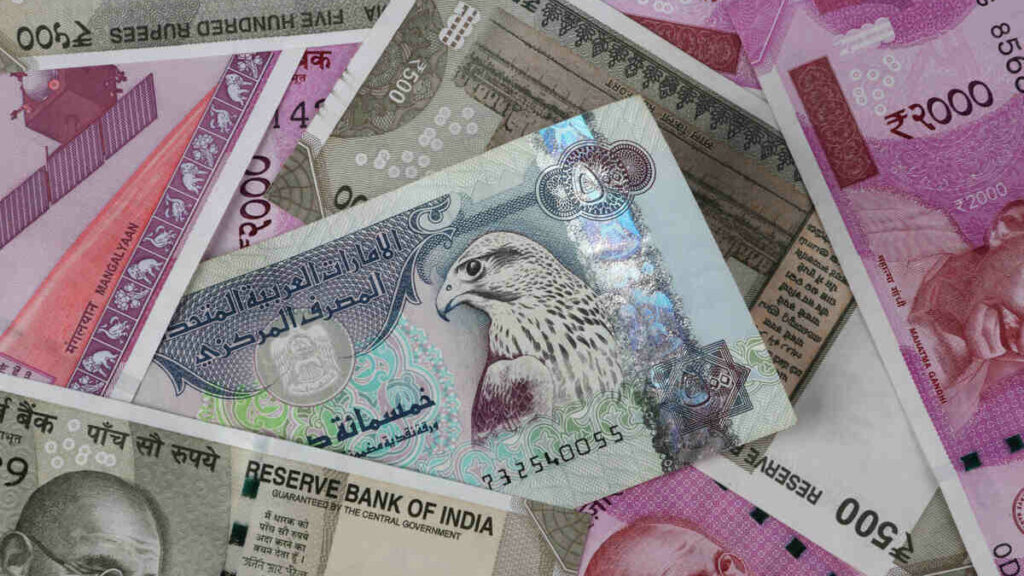
The Indian rupee’s drop above 90 to the dollar and past 24.50 versus the dirham, which currency dealers characterize as “structurally significant,” has opened one of the most favorable remittance windows for non-resident Indians in years.
With estimates pointing to continued deterioration beyond 2026, researchers say the current era represents a unique convergence of macroeconomic difficulty in India with supportive global conditions, amplifying remittance benefits for millions of NRIs in the Gulf.
The rupee, down almost 5% year to date, is currently Asia’s worst-performing currency, on track for its steepest annual fall since 2022. Its decline has been fueled by rising fiscal and trade deficits, continuing foreign investor withdrawals, lower foreign direct investment, soft external commercial borrowings, and a slowing of nominal GDP growth. These factors have coalesced to increase the currency’s susceptibility in global markets.
This is the adjustment the rupee must make until trade negotiations are resolved and capital flows stabilize,” said Dhiraj Nim, ANZ’s FX analyst. He predicts the currency will fall further to 91.30 against the dollar by the end of next year, but warns that the move could come sooner if foreign outflows accelerate.
Also Read:
Homa Heybati: Breaking Barriers in the Renewable Energy and Finance Landscape
Nicolas Baerfuss: A Digital Space for Development and Well-being
About Author