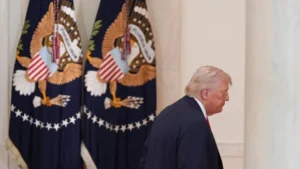
For decades, the American dream stood as the ultimate model of global ambition. It represented the power of a perfect alignment: the moment when individual talent and hard work combined with the courage to take risks. All of this was intended to translate into prosperity, regardless of where one started out. The ‘dream’ has been one of the major draws for immigration to the US and remains the country’s most famous export.
The concept of the American dream wasn’t just based on the size of the market – although the country’s domestic consumer base was clearly enormous, and it had the kind of infrastructure that rewarded scale. It was also about mindset and the ability to tolerate failure and understand that it was just part of the journey. This was topped off by a regulatory environment that enabled rather than hindered innovation.
While many of those elements are still in place as we approach 2026, the situation has become increasingly complicated. The barriers to entry are now much higher, and regulation has become far more fragmented. On top of that, costs are rising, and the political environment is filled with uncertainty. It’s not surprising that this has dulled the US’s edge as the default destination for entrepreneurs.
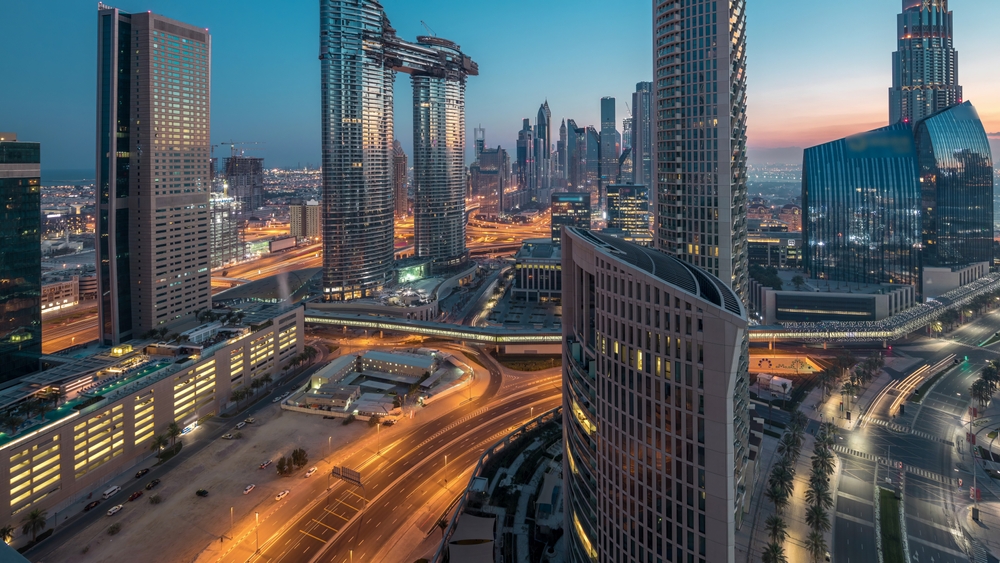
At the same time, another model has emerged – Dubai and, more broadly, the UAE. It is a model that has borrowed some of the most effective elements of the original American concept but re-engineered them for a different time and place.
This article examines what made the American dream work in the first place and how Dubai has taken this model and reinterpreted it for the more globally connected world we live in today.
What Made the American Dream Work?
The best place to start when examining the rise of Dubai is to look at what made America such a powerful entrepreneurial location in the first place.
At its peak, the US operated on four key elements – first, it was a relatively easy market to enter, with access to capital and minimal friction for new businesses. Second, it was a huge domestic market that allowed ideas to grow quickly without the need to cross borders. Third, there were strong legal frameworks and contract enforcement. Finally – and, in many ways, this is the most unique of the elements – it offered a national narrative that celebrated people who built things and took risks.
Consequently, American entrepreneurship wasn’t some kind of afterthought. It was embedded in US identity and institutions from the beginning, and what we are seeing in Silicon Valley is simply the most recent manifestation of this. However, things have weakened over the years, with greater regulatory complexity, narrower and more complex immigration pathways, and rising costs. This is not to say the dream has disappeared, but it has become harder for many people to access, especially for global founders without large local networks.
Dubai’s Reinterpretation of the Dream
Dubai has not simply tried to copy the American model. This would have been a disaster for a country operating in an entirely different context. Instead, the American dream was studied and distilled before being adapted to a smaller, faster-moving country operating in a more globally connected context.
In its early iterations, the US relied on scale, which Dubai is unable to emulate. But anyone who has worked in the emirate knows it relies on velocity, and its deliberately designed entrepreneurial ecosystem reinforces this.
In Dubai, entrepreneurship is encouraged by culture, as in the US. But it is also structurally prioritised by the government, the private sector, and individuals. It is the result of a national agenda that treats entrepreneurs as strategic assets. In real terms, this means business setup procedures are streamlined and efficient.
Free zones offer attractive environments for entrepreneurs and founders, enabling businesses to establish themselves quickly. Meanwhile, regulatory bodies work together to provide a coordinated approach, and access to visas has never been more straightforward.
Making ‘ease of Entry’ a Strategic Advantage
One of the ways Dubai outperforms traditional entrepreneurial hubs is ease of entry. While incorporation in the US is simple, what follows is often a slow process, including banking, visas, taxation, and compliance. This is particularly the case for non-citizens and can slow everything to a crawl.
In Dubai, however, the journey is comparatively linear. It’s a place where you can set up a company, secure residency, open a bank account, and operate internationally within weeks. This is a very attractive prospect for entrepreneurs who value time as a competitive advantage.
This is not to say that ease has come at the expense of credibility. In fact, the UAE has invested heavily in financial oversight and alignment with international standards. So, for the newcomer, the system strikes a balance between efficiency and not feeling lax.
Putting the global mindset front and centre
While America’s entrepreneurial success was built on the strength of its domestic market, Dubai’s success is built on its global orientation.
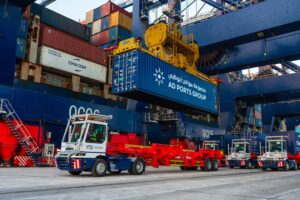
From the outset, Dubai-based businesses are designed to operate internationally and take advantage of the emirate’s location at the crossroads of three continents. For modern entrepreneurs, this matters more than population size. Founders can live in Dubai, operate across Europe, Asia, and Africa, and structure their businesses in a way that is both compliant and competitive. While America was initially about making it big in one giant market, in Dubai, it’s about building relevance across multiple regional markets.
The Story is Just Beginning
The US was able to bring together talent, capital, and opportunity all in one place. Dubai has recreated this by creating a place that, along with opportunity, also offers a desirable lifestyle, a good safety record, and political and economic predictability. For entrepreneurs with families, long-term plans or cross-border responsibilities, such stability is a must.
One of the most underappreciated elements of ‘the Dubai dream’ is its narrative. The American story gained power after being shared and reinforced across generations. In contrast, Dubai’s story is defined by ambition without apology, celebrating a nation that openly declares its intent and then systematically implements the policies to achieve it. This approach creates a uniquely supportive environment for entrepreneurs. While Dubai may never replace the United States in global cultural mythology, it is increasingly superseding it in entrepreneurial reality.
The American dream promised that anyone could make it. The Dubai dream promises something slightly different but arguably more relevant today. It promises that if you are serious, capable, and willing to build, the system will not work against you. In fact, it’s on your side.
About Author