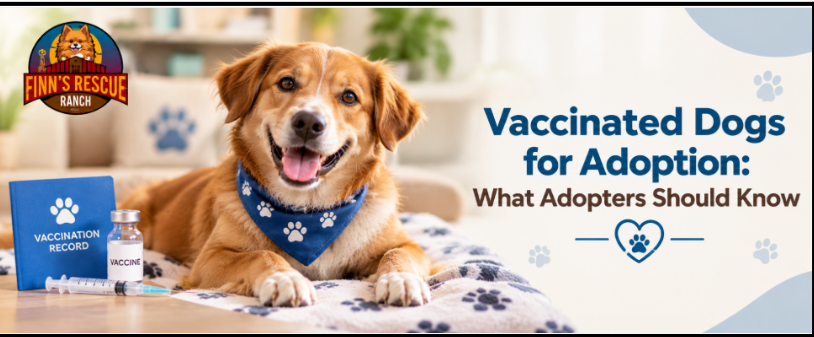
Health information is an important part of responsible dog adoption. People searching for vaccinated dogs for adoption may want to understand what preventive care a potential companion has already received before bringing the dog home.
Vaccination status is useful information, but it should be considered as one part of the dog’s overall health picture. Age, medical history, current condition, previous treatments, lifestyle, and veterinary recommendations can all matter.
The goal is to understand the dog’s known health information and prepare for continued care after adoption.
Why Vaccination Information Matters
Vaccinations are an important part of preventive veterinary care. When records are available, they can help adopters and veterinarians understand what care has already been provided.
Before adoption, prospective owners can ask about:
- Available vaccination records
- Previous veterinary visits
- Known medical conditions
- Current medications
- Previous treatments
- Spay or neuter status
- Recommended follow-up care
Having this information available can make the transition from rescue care to a new home more organized.
Vaccination Is Only One Part of Health
A vaccinated dog is not automatically free from every possible health concern.
A dog’s overall wellbeing can involve many areas, including nutrition, dental care, parasite prevention, weight, exercise, age-related care, and existing medical conditions.
For this reason, adopters should avoid viewing vaccination status as the only measure of a dog’s health.
A veterinarian can help establish an appropriate preventive-care plan based on the individual dog.
Ask About Medical Records
When considering adoption, ask whether the rescue organization has documentation that can be shared with the adopter.
Useful information may include:
- Vaccination history
- Medical treatments
- Medication information
- Surgical history
- Known health conditions
- Veterinary recommendations
If records are incomplete, ask what information is known rather than making assumptions.
Once the dog is adopted, available records can be provided to the family’s veterinarian.
Prepare for a Veterinary Appointment
A veterinary appointment can help establish continuity of care after adoption.
During the appointment, the veterinarian may discuss the dog’s overall health and recommend appropriate preventive care based on the dog’s age, history, and circumstances.
Adopters can prepare questions about:
- Vaccinations
- Parasite prevention
- Nutrition
- Weight
- Dental health
- Exercise
- Preventive examinations
- Any known medical concerns
Responsible ownership means continuing appropriate care rather than assuming that previous treatment eliminates the need for future veterinary attention.
Consider the Whole Dog
Health information is important, but it should not be the only consideration when selecting a companion.
Adopters should also consider temperament, energy level, age, size, behavior, training, and household compatibility.
For example, a dog with an easygoing personality may be a better fit for a quiet household, while a more energetic dog may suit a family with an active routine.
Organizations such as Finn’s Rescue Ranch work to care for rescued dogs and connect them with suitable homes.
Preparing for Adoption
Before bringing a dog home, prepare a comfortable and safe environment.
Consider having:
- Food and water bowls
- Appropriate food
- Bedding
- Identification
- A secure leash
- Suitable toys
- A quiet resting space
- Cleaning supplies
It is also helpful to plan where the dog will sleep, eat, exercise, and spend time during the first few days.
Allow Time for Adjustment
A newly adopted dog may experience a major change in environment and routine.
Some dogs settle quickly, while others need additional time. Keeping the first days calm can help reduce unnecessary stress.
Establish predictable routines for meals, walks, rest, and bathroom breaks. Positive reinforcement can help the dog understand the new household.
Prospective adopters can also review the dog adoption process to better understand the steps involved in preparing for a new companion.
Frequently Asked Questions
1. Are vaccinated dogs automatically completely healthy?
No. Vaccination is an important part of preventive care, but overall health depends on many other factors.
2. Should an adopted dog see a veterinarian?
Adopters should discuss appropriate veterinary care with a qualified veterinarian and provide any available medical records.
3. What health information should I ask for before adoption?
Ask about vaccination records, medical history, medications, treatments, surgeries, and known health concerns.
4. What if vaccination records are incomplete?
Ask the rescue organization what information is available and discuss any uncertainty with a veterinarian.
5. Does vaccination status affect the adoption decision?
It can be relevant, but adopters should consider the dog’s overall health, temperament, lifestyle compatibility, and ongoing care needs as well.
Conclusion
Searching for vaccinated dogs for adoption can help prospective owners begin with useful information about a dog’s preventive care. However, responsible adoption requires looking at the complete picture.
Review available health records, understand the dog’s individual needs, prepare your home, and establish a plan for ongoing veterinary care. A thoughtful approach can help create a smoother transition and support the dog’s wellbeing for years to come.
About Author